Mobile POS for Laundromats: Boost Revenue in 2026
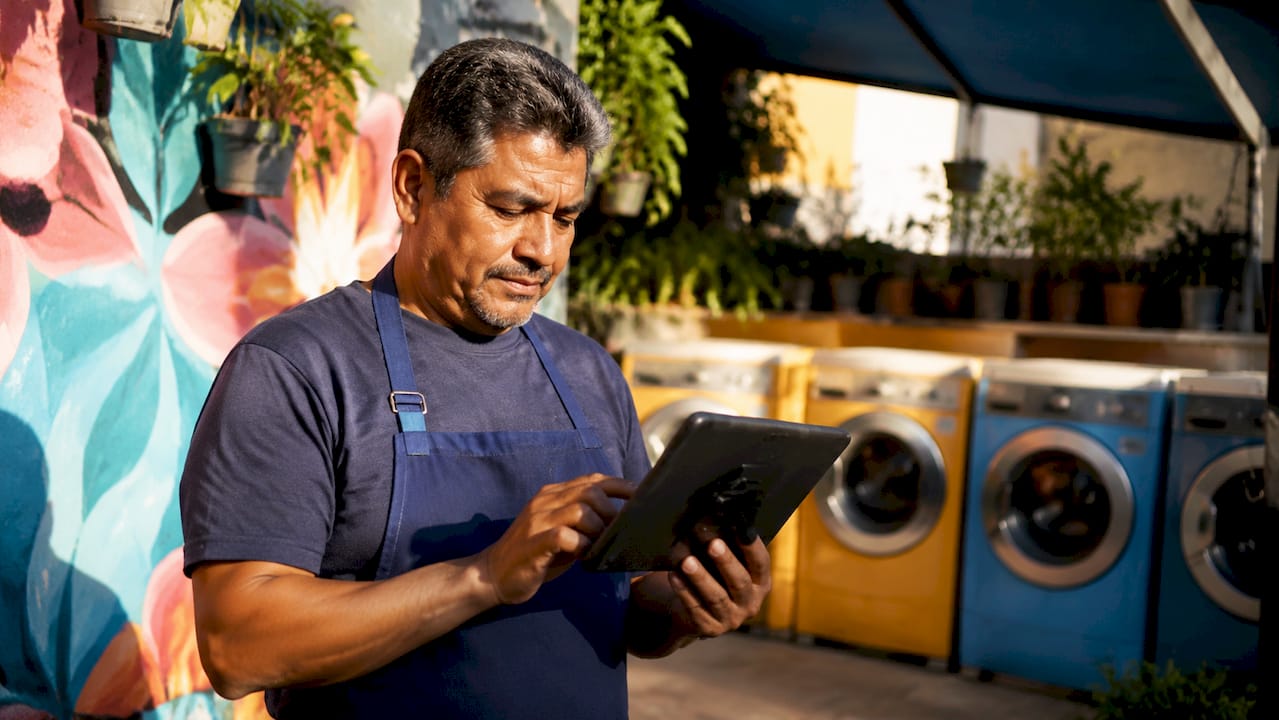
A mobile POS system in a laundromat is the central technology that handles payments, machine management, and customer interactions, making it the digital brain of your entire operation. The role of mobile POS in a laundromat goes far beyond swiping cards. These systems manage machine starts, track employee activity, handle wash-dry-fold orders, and generate real-time revenue reports, all from a single interface running on a standard iOS device. Platforms like Kansoflow, Tangerpay, and the Anton terminal represent the current generation of purpose-built laundromat payment solutions. Understanding how they work, and where they fall short, is the difference between running a reactive business and a profitable one.
How does mobile POS improve payment processing in laundromats?
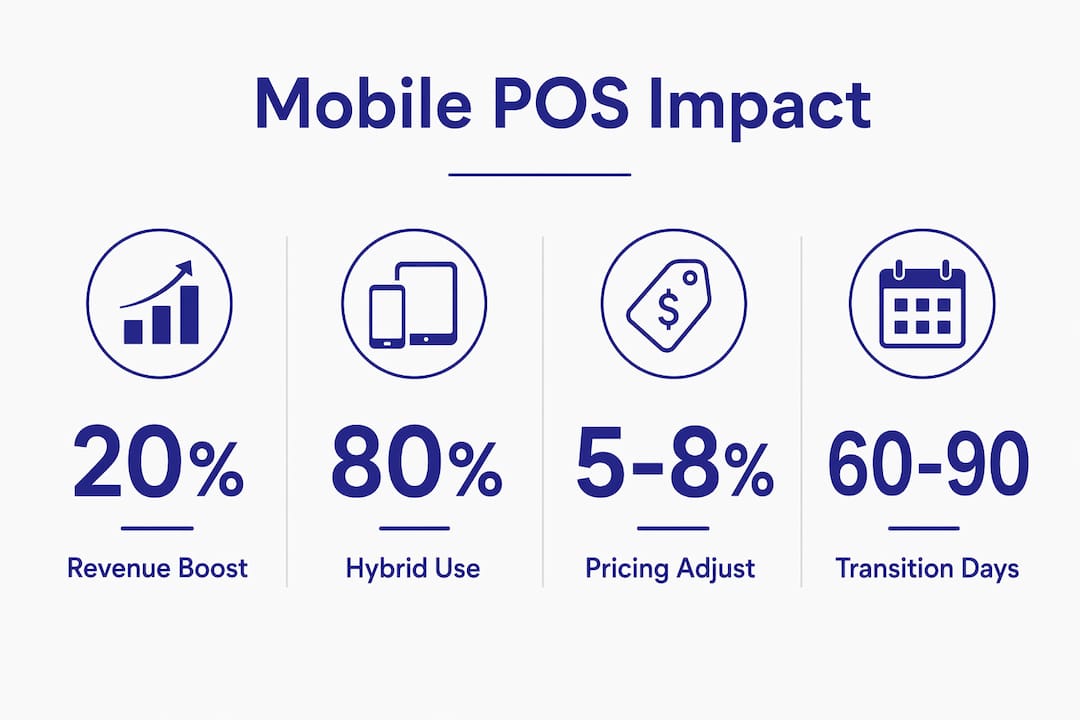
Mobile POS systems change the economics of laundromat payment processing in two concrete ways: they increase revenue per customer and reduce the friction of collecting it. Laundromat owners see a revenue increase of 17%–22% after converting to cashless systems, with customers spending 58% more per session when paying by card or mobile wallet versus cash. That gap exists because digital payments remove the psychological barrier of needing exact change.
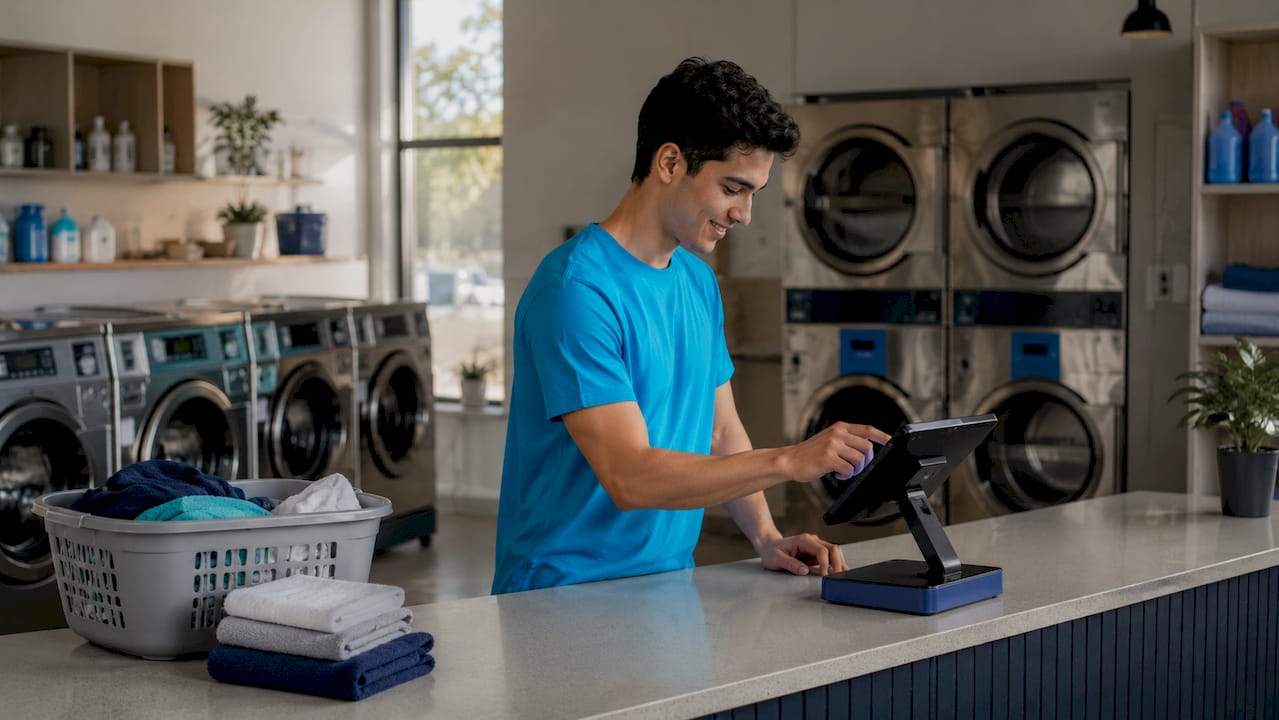
The most effective laundromat payment solutions in 2026 use a hybrid model, not a fully coinless one. Approximately 80% of laundromat owners prefer hybrid payment models that accept both coin and cashless options, with only 20% going fully coinless. This split reflects a real customer base that includes both Gen Z mobile wallet users and older patrons who still pay in quarters.
The table below breaks down how different payment types affect your operation:
| Payment Type | Transaction Speed | Labor Impact | Revenue Potential |
|---|---|---|---|
| Coin only | Slow (change required) | High (coin collection) | Lowest |
| Card/tap only | Fast | Low | High |
| Mobile wallet (Apple Pay, Google Pay) | Fastest | Lowest | Highest |
| Hybrid (coin + cashless) | Moderate | Moderate | Balanced and future-proof |
Merchant processing fees do cut into margins. Fees typically run 3%–5% per transaction. But that cost is offset by the labor savings on coin collection and machine maintenance, which digital payments reduce by 60%–70%. For most owners, the math favors going cashless or hybrid within the first year.
Pro Tip: Set your cashless pricing 5%–8% higher than your coin price to absorb processing fees without reducing your net margin. Many customers will not notice the difference, and those who do often still prefer the convenience.
What operational efficiencies do mobile POS systems bring?
The operational impact of mobile POS systems for laundromats extends well past the payment terminal. These systems reduce the manual labor tied to running a physical location, and they give owners visibility they never had with coin-only setups.
The most direct labor savings come from eliminating coin collection rounds. With a cashless or hybrid system, attendants spend less time emptying machines and counting quarters. That time shifts to customer service and order management, which directly improves the customer experience.
Remote machine management is the feature most owners underestimate before they have it. Mobile POS systems enable remote diagnostics, real-time machine status updates, and dynamic pricing adjustments without requiring anyone to be on site. That means you can respond to a machine error from your phone at 10 p.m. instead of driving in.
Here are the core operational gains you should expect from a well-implemented system:
- Coin handling labor reduced by 60%–70%, freeing attendants for higher-value tasks
- Remote machine starts triggered via app or kiosk, cutting wait times for customers
- Real-time alerts on machine faults, cycle completions, and low-supply conditions
- Fraud reduction through digital transaction logs that replace paper records
- Multi-location visibility from a single dashboard, critical for owners with more than one store
Connectivity is where many owners get burned. Wi-Fi-only setups are a frequent point of failure, especially during peak hours when your router is stressed and your revenue is highest. Cellular-backed mobile POS systems use 4G, LTE, or 5G to keep payment processing running even when your local network goes down. If you are evaluating systems, treat cellular backup as a non-negotiable requirement, not an optional upgrade.
Pro Tip: When transitioning from coin-only to hybrid, run both systems in parallel for 60–90 days. This gives your regular customers time to adjust their habits without feeling forced, and it gives you real data on which payment method your specific customer base prefers.
What security roles does mobile POS play in laundromats?
The role of POS security in a laundromat is often framed as a technology problem, but it is fundamentally a cash problem. Laundromats that rely on coin-operated machines carry significant amounts of physical cash on site at all times. That cash attracts theft and vandalism. Mobile POS reduces cash on site, cutting the risk of break-ins and lowering repair costs from vandalism.
Beyond physical security, modern mobile POS systems include software-level protections that coin systems simply cannot offer. The most significant of these is biometric authentication for machine starts. Facial verification used for machine starts allows owners to monitor attendant activity and prevent unauthorized machine use, which is a common source of revenue leakage in unattended or semi-attended locations.
The key security considerations for any mobile POS deployment are:
- Cash reduction on site. Every dollar shifted to digital is a dollar that cannot be stolen from a coin vault.
- Per-device PIN security. Systems like Kansoflow use granular PIN controls so staff can lock or switch user profiles in seconds on a busy shop floor.
- Biometric machine start controls. These prevent unauthorized cycles and create an audit trail for every machine activation.
- Encrypted transaction logs. Digital records replace paper and reduce the risk of internal fraud or disputes.
- Regular software updates. Outdated POS software is a cybersecurity liability. Choose a system with automatic updates and a clear security patch history.
“The shift from coin to cashless is not just about convenience. It is about removing the physical vulnerabilities that have made laundromats targets for decades.”
The one security risk that mobile POS introduces is technology dependency. If your system goes offline and you have no coin fallback, you lose revenue. This is why the hybrid model and cellular connectivity matter so much from a security standpoint, not just an operational one.
How do you choose the right mobile POS system for your laundromat?
Choosing a mobile POS system for your laundromat starts with one honest question: what does your current customer base actually use to pay? If your location serves a neighborhood with a high proportion of older residents or recent immigrants, a fully coinless system will alienate a meaningful share of your revenue. If you are in a college town, going cashless faster makes more sense.
Hybrid mobile POS models serve both Gen Z mobile wallet users and traditional cash customers, keeping your business accessible during the transition period. The behavioral reality is that payment habits change slowly. A phased hybrid payment adoption approach with clear customer education reduces churn and makes the shift sustainable.
When comparing systems, evaluate these features directly:
| Feature | Why It Matters |
|---|---|
| Cellular connectivity (4G/LTE/5G) | Prevents outages from killing transactions |
| Remote machine start and diagnostics | Reduces on-site labor requirements |
| Multi-language support | Serves diverse customer demographics |
| App and kiosk integration | Prevents complete service interruption if one channel fails |
| Stripe or Square payment processing | Ensures competitive fee rates and broad card acceptance |
| Real-time analytics dashboard | Gives owners data to make pricing and staffing decisions |
Integrations that combine mobile apps and physical kiosks working independently prevent complete service interruptions. If your app goes down, the kiosk keeps running. If the kiosk has a hardware issue, customers can still pay through the app. Redundancy is not a luxury in a business that operates 7 days a week.
Kansoflow is built specifically for this environment. It runs natively on iOS, pairs with Bluetooth scales and Star Micronics printers, and handles complex transactions like park-and-resume sales that other systems cannot manage. The Kansoflow features page details how its hybrid payment engine and real-time analytics work together to give owners a clear picture of every transaction.
Pro Tip: Before signing any POS contract, calculate your current monthly coin collection labor cost in hours multiplied by your attendant wage. Compare that number to the projected monthly processing fees. In most cases, the fee cost is lower than the labor cost within 90 days.
Key takeaways
Mobile POS systems are the most direct lever laundromat owners have for increasing revenue, reducing labor, and improving security simultaneously.
| Point | Details |
|---|---|
| Hybrid models outperform coinless | 80% of owners use hybrid systems to serve both digital and cash-paying customers. |
| Revenue lift is measurable | Cashless adoption drives a 17%–22% revenue increase and 58% higher spend per session. |
| Labor savings offset processing fees | Digital payments cut coin handling labor by 60%–70%, exceeding the 3%–5% fee cost. |
| Cellular connectivity is non-negotiable | Wi-Fi-only systems fail at peak times; 4G/LTE backup keeps transactions running. |
| Security improves with less cash on site | Reducing physical cash cuts theft risk and vandalism repair costs substantially. |
The part nobody tells you about going cashless
I have talked with a lot of laundromat owners who approached mobile POS adoption as a payment upgrade. They swapped out coin mechanisms, installed a card reader, and waited for the revenue bump. Some got it. Others saw customer complaints spike and felt like they had made a mistake.
The difference was almost never the technology. It was the transition strategy. Owners who communicated the change in advance, posted clear signage, kept coin options available for 90 days, and trained their attendants to help confused customers had smooth rollouts. Owners who flipped the switch overnight and assumed customers would figure it out lost regulars they never got back.
The other thing I would push back on is the idea that mobile POS is primarily a payment tool. The owners getting the most value from these systems are using them to make operational decisions. They are looking at peak hour data and adjusting staffing. They are using remote diagnostics to catch machine issues before customers complain. They are running dynamic pricing during off-peak hours to fill capacity. That is a fundamentally different mindset than “I installed a card reader.”
The future of this industry belongs to owners who treat their POS system as a management platform, not a cash register replacement. The technology is already there. The question is whether you are using it that way.
— Artur
Run your laundromat smarter with Kansoflow
If you are ready to move beyond coin-only operations, Kansoflow is built for exactly this transition. It runs on standard iOS devices, supports Stripe and Square payment processing, and gives you a real-time view of every order, machine, and transaction in your store.

Kansoflow handles hybrid payment models, visual order tracking through a drag-and-drop Kanban board, and photo intake at the counter to eliminate lost-garment disputes. It is designed for busy shop floors where speed and clarity matter more than feature bloat. Whether you run one location or ten, Kansoflow’s mobile POS platform gives you the operational control to scale without adding headcount. See the full feature set at kansoflow.com/features.
FAQ
What is the role of mobile POS in a laundromat?
A mobile POS system in a laundromat manages payments, machine starts, order tracking, and real-time reporting from a single platform. It replaces coin-only systems with a digital management layer that reduces labor and increases revenue visibility.
Do laundromats need to go fully cashless to benefit from mobile POS?
No. Approximately 80% of laundromat owners use hybrid models that accept both coin and cashless payments. A hybrid approach captures the revenue benefits of digital payments while retaining customers who prefer cash.
How much revenue can a laundromat gain by adding cashless payments?
Laundromats typically see a 17%–22% revenue increase after adding cashless options, with customers spending 58% more per session compared to cash transactions.
What security risks does mobile POS introduce for laundromats?
The primary risk is technology dependency. If a system goes offline with no coin fallback, revenue stops. Cellular-backed systems and hybrid payment models mitigate this risk by providing redundancy.
How long does it take customers to adapt to cashless laundromat payments?
A phased adoption period of 60–90 days, with clear signage and staff support, is the standard recommendation. Running coin and cashless options in parallel during this window reduces customer churn significantly.