Laundromat Staff Training Best Practices for 2026
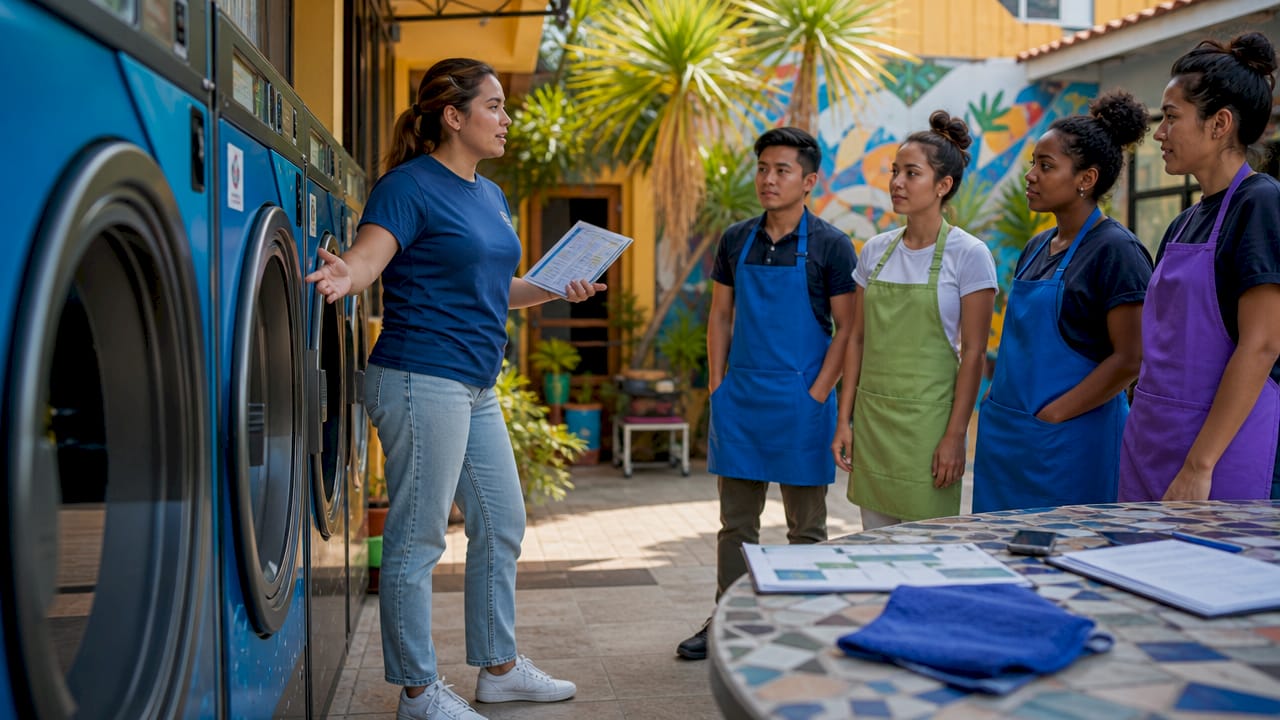
Laundromat staff training best practices are defined as the structured, role-specific methods that turn new hires into capable, customer-ready attendants within days, not weeks. The strongest programs cover three non-negotiable pillars: safety protocols, equipment troubleshooting, and customer service skills. Training should begin 14 days before opening, giving attendants enough time to absorb procedures before real customers arrive. Managers who treat this process as a one-time orientation consistently lose ground to those who build repeatable systems. The difference between a smooth operation and a chaotic one almost always traces back to how well the staff was prepared.
1. What are the essential training components for laundromat staff?
Every effective laundromat training program starts with three core areas: safety, equipment, and customer interaction. Skip any one of them and you create gaps that show up as service failures, machine downtime, or customer complaints.
Safety protocols are the foundation. Attendants must know how to handle cleaning chemicals correctly, execute machine lockout procedures, and respond to spills or equipment faults without hesitation. These are not optional skills. They protect your customers, your staff, and your liability exposure.
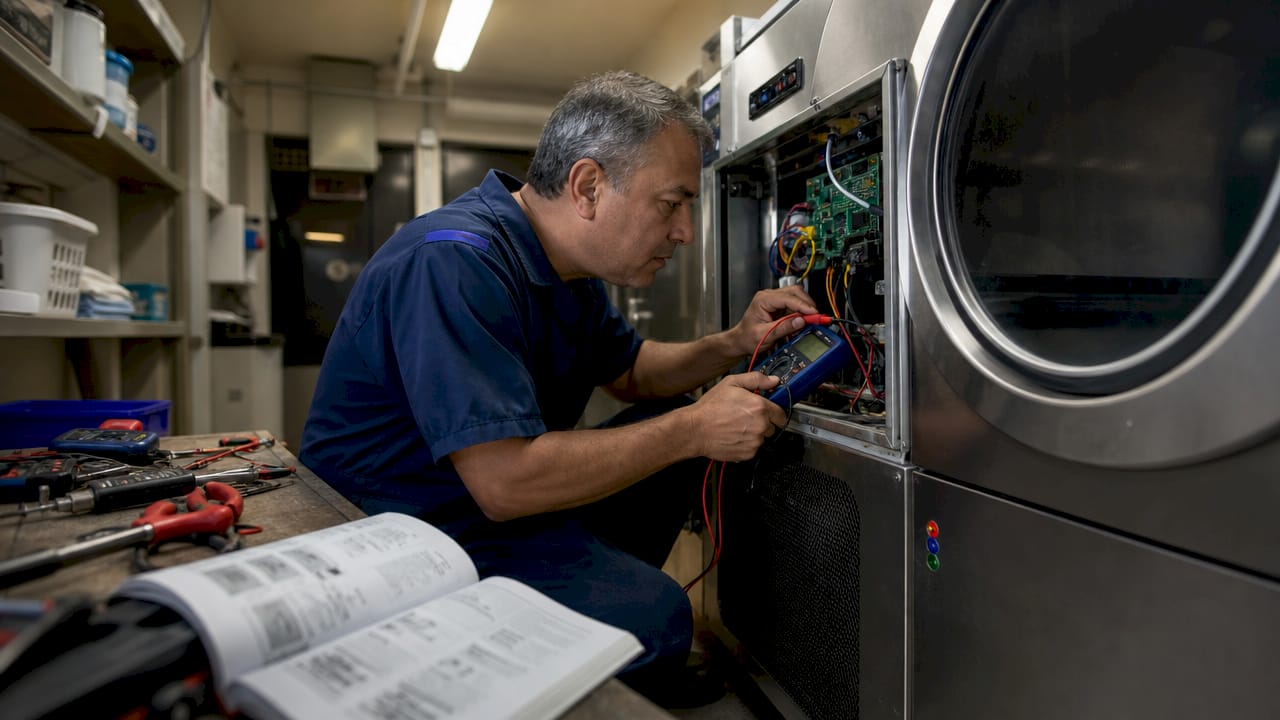
Equipment troubleshooting basics reduce costly service calls. Attendants who can identify a machine error code, reset a cycle, or flag a recurring fault before it becomes a breakdown save you real money. Laminated daily maintenance logs posted at each machine give attendants a clear checklist to follow during every shift.
Customer service skills complete the picture. This means scripted greetings, a clear process for handling complaints, and basic upselling techniques for services like wash-dry-fold. Role-specific breakdowns matter here. An attendant running the front counter needs different skills than a wash-dry-fold operator or a shift manager.
Pro Tip: Build a role card for each position: attendant, wash-dry-fold operator, and shift lead. Each card lists the top five tasks and the top three customer scenarios for that role. New hires absorb role-specific expectations faster when the information is filtered, not dumped.
- Safety: chemical handling, machine lockouts, spill response
- Equipment: error code identification, cycle resets, fault reporting
- Customer service: greetings, complaint scripts, upsell prompts
- Role-specific tasks: counter attendant vs. wash-dry-fold operator vs. shift manager
2. How to structure hands-on and documentation-based training programs
Documentation is the backbone of fast onboarding. New attendants reach full productivity within two shifts when they have written procedures to follow rather than relying on verbal instructions from a manager who may not always be present.
The most practical format is an operations binder or a shared digital folder. Both work. The key is that every task has a written standard operating procedure (SOP) attached to it. When a new hire can read exactly how to process a wash-dry-fold order, weigh a bag, tag a garment, and log a machine fault, they stop guessing and start executing.
Hands-on practice during a soft opening or a simulated shift is the second layer. Reading an SOP is not the same as doing the task under real conditions. Schedule at least one full simulated shift before a new attendant handles customers alone.
- Write SOPs for every recurring task before the first hire starts
- Organize SOPs into a binder or digital folder by role and shift
- Walk new hires through each SOP verbally on day one
- Run a simulated shift on day two with the manager present
- Let the attendant run a real shift independently on day three, with the manager reachable by phone
Pro Tip: Use laminated one-page checklists at each station rather than sending staff to a binder mid-shift. A checklist on the wall gets used. A binder in the back room gets ignored.
Maintenance logs posted at machines serve a dual purpose. They train attendants to inspect equipment daily and generate two months of fault data that informs your repair budget and machine replacement decisions.
3. How can technology and AI improve laundromat training efficiency?
AI tools have changed what a solo laundromat operator can produce without a training department. Using ChatGPT or Claude saves operators 4–6 hours weekly on creating SOPs, training manuals, and customer review replies, at zero software cost. That is a full workday reclaimed every week.
The practical applications are direct:
- SOP generation: Paste your process into ChatGPT and ask it to write a step-by-step attendant guide. Edit for your specific machines and done.
- Training manuals: Use Claude to draft a new hire handbook covering safety, customer service scripts, and machine troubleshooting in under an hour.
- Scheduling apps: Tools like When I Work or Homebase reduce the back-and-forth of shift swaps and coverage requests, cutting management time on scheduling by a significant margin.
- Automated customer replies: AI-generated response templates handle routine inquiries and review responses without requiring manager attention.
| Training task | Manual approach | AI-assisted approach |
|---|---|---|
| SOP creation | 3–4 hours per document | 20–30 minutes with editing |
| New hire handbook | Full week of writing | 1–2 hours with review |
| Customer reply templates | Written case by case | Generated in bulk, edited once |
| Shift scheduling | Daily manager involvement | Automated with approval step |
POS software integration adds another layer. A platform like Kansoflow tracks order flow, staff activity, and customer interactions in real time. That data tells you which attendants are processing orders efficiently and where training gaps are showing up in the workflow.
4. What wage and motivational strategies improve staff retention?
Pay is the most direct lever for retention. Effective laundromat attendant wages range from $16–$22 per hour, compared to a local market average of $13–$15 per hour. The premium is not charity. It reduces turnover, which is the single largest hidden cost in laundromat labor.
The mindset shift that matters most is treating attendants as customer-facing brand ambassadors rather than low-wage labor. Viewing staff solely as low-wage workers produces exactly that: low engagement, high turnover, and inconsistent service. Operators who invest in their attendants get staff who take ownership of the floor.
“Your attendant is often the only human interaction a customer has with your business. Train them like that interaction matters, because it does.”
Mystery shopping is the accountability mechanism that keeps standards from drifting. Regular mystery shopping checks confirm that cleaning standards, conflict resolution, and wash-dry-fold sales practices stay aligned with what you trained. Without it, standards erode quietly over months.
- Pay above local market rates to attract and retain quality staff
- Frame the attendant role as a brand ambassador position from day one
- Use mystery shopping monthly to verify service standards
- Tie performance feedback to specific, observable behaviors, not general impressions
Adding wash-dry-fold services before staff are trained, space is allocated, and control systems are in place leads to quality failures and profitability loss. Expand only when your team is ready.
5. Why wash-dry-fold training directly affects your profit margin
Wash-dry-fold is not a passive revenue stream. Trained attendants folding 50–65 lbs per hour create a 30–40% margin channel. Untrained staff folding 25 lbs per hour push labor costs above $0.60 per pound, which erases the margin entirely.
The pounds-per-labor-hour metric is the number every WDF operator should track. It tells you immediately whether your training is working or whether you have a productivity problem hiding inside a revenue line that looks healthy on the surface.
WDF operations are only profitable when attendant productivity is high. Training and workflow design are not optional add-ons for this service. They are the product. A poorly trained WDF attendant is not just slow. They are actively costing you money on every order they process.
The fix is specific: train attendants on folding technique, bag weighing, order tagging, and turnaround time targets before the service goes live. Set a minimum pounds-per-hour threshold. Measure it weekly. Retrain anyone who falls below it consistently.
6. Comparing staff training techniques by laundromat type
The right training method depends on your operation’s size, staffing model, and service mix. A single-location self-service laundromat needs a different approach than a multi-location wash-dry-fold operation.
| Training method | Best for | Limitation |
|---|---|---|
| In-person demonstration | All laundromat types | Requires manager time per hire |
| On-the-job shadowing | Fully staffed locations | Inconsistent if trainer varies |
| Video tutorials | Multi-location operators | Requires upfront production time |
| AI-generated guides | Any size, any service mix | Needs editing for local specifics |
| Mystery shopping | Ongoing quality control | Not a standalone training method |
Unattended or lightly staffed locations benefit most from laminated checklists and AI-generated guides because manager availability is limited. Fully staffed locations with wash-dry-fold services need in-person demonstration and shadowing to build the muscle memory that productivity metrics require.
Ongoing refresher sessions prevent skill drift. Schedule a 30-minute team review monthly. Cover one topic per session: machine troubleshooting, customer complaint handling, or WDF folding technique. Short, focused sessions outperform annual retraining in retention and behavior change.
Key takeaways
Effective laundromat staff training requires role-specific documentation, hands-on practice, competitive wages, and consistent performance measurement to produce reliable service quality and profitable operations.
| Point | Details |
|---|---|
| Start training 14 days early | Begin before opening so attendants are confident before real customers arrive. |
| Document every task as an SOP | Written procedures get new hires to full productivity within two shifts. |
| Pay above local market rates | Wages of $16–$22/hr reduce turnover and improve customer-facing performance. |
| Track WDF productivity by the pound | Attendants folding below 50 lbs/hr erode margin; measure and retrain consistently. |
| Use AI tools to save management time | ChatGPT and Claude generate manuals and SOPs in a fraction of the manual writing time. |
What I’ve learned from watching laundromats train staff the hard way
The operators who struggle most with staffing are not the ones who pay too little or hire the wrong people. They are the ones who never wrote anything down. They trained verbally, assumed the information stuck, and then wondered why every new hire made the same mistakes.
The fix is boring and it works: write the SOP, laminate the checklist, run the simulated shift. Attendants who have a written reference on the wall do not need to interrupt a manager every 20 minutes. That alone recovers hours of your week.
The brand ambassador framing is not motivational fluff. It changes how attendants make decisions when you are not in the room. An attendant who sees themselves as a low-wage machine monitor will do the minimum. One who understands they represent your business to every customer will handle a complaint differently, fold a shirt more carefully, and notice when something is wrong before it becomes a problem.
AI tools like ChatGPT have removed the last excuse for not having documentation. You can generate a complete new hire handbook in an afternoon. There is no reason to onboard staff with a verbal walkthrough in 2026.
The hidden loss I warn every operator about is untrained WDF labor. It looks like revenue on your books until you calculate the labor cost per pound. Train your WDF staff to a measurable standard before you take a single order, or the service will cost you more than it earns.
— Artur
How Kansoflow supports your training and daily operations
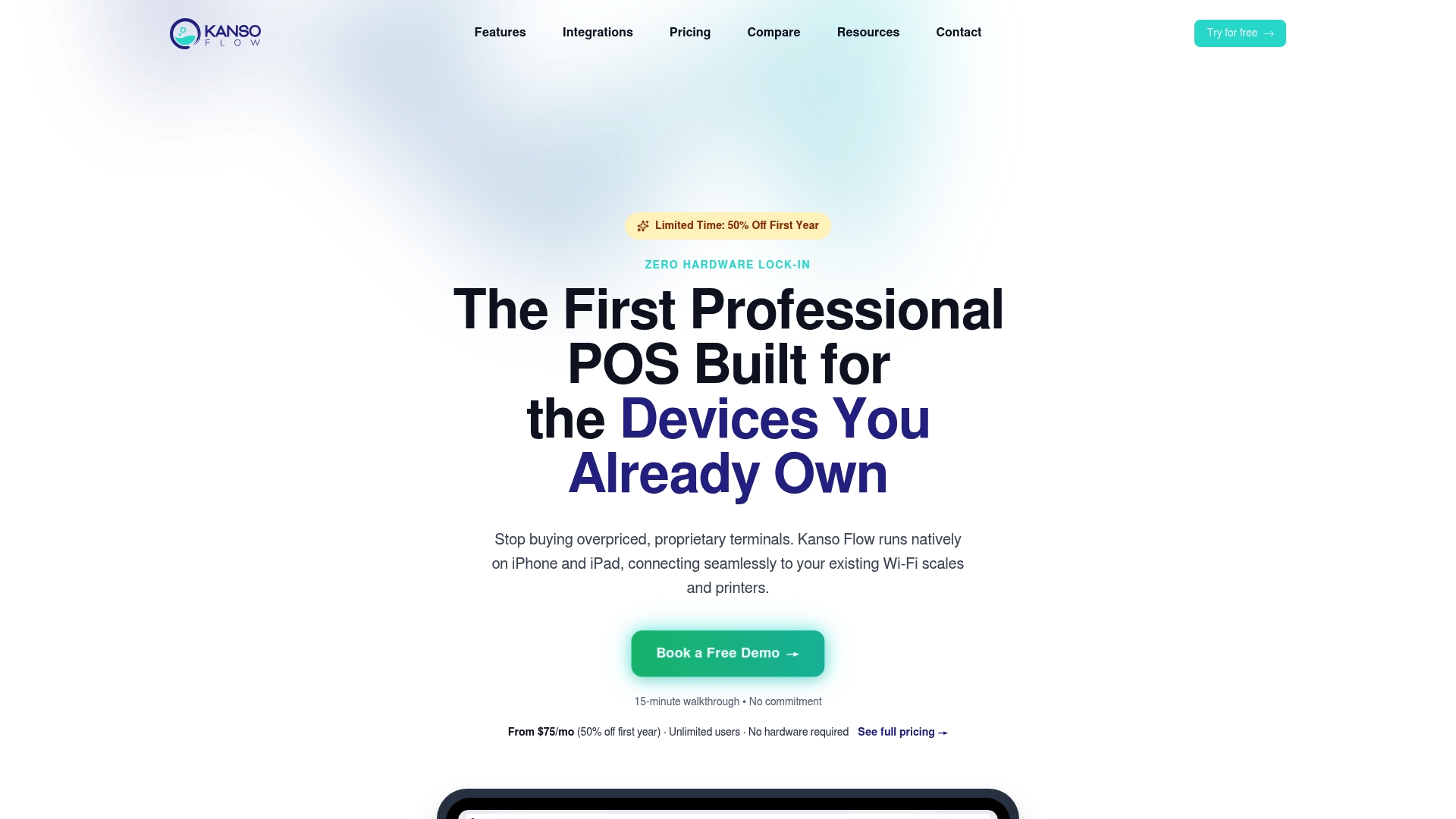
Kansoflow is a native iOS POS and management platform built specifically for laundromat operators. Its visual Kanban board lets attendants track every order through Wash, Fold, Dry Cleaning, and Ready stages without confusion, which cuts the learning curve for new hires significantly. Photo intake at the counter eliminates lost-item disputes and gives staff a clear record of every garment. The Kansoflow platform also supports per-device PIN security, so staff can switch users in seconds on a busy floor. For operators managing multiple locations, inter-branch transfer tracking and real-time order visibility replace the paper tickets and verbal handoffs that slow training down and create errors.
FAQ
How long does it take to train a new laundromat attendant?
New attendants reach full productivity within two shifts when given documented SOPs and checklists. Verbal-only training takes significantly longer and produces less consistent results.
What should laundromat staff training cover first?
Safety protocols come first, including chemical handling and machine lockout procedures. Equipment troubleshooting and customer service skills follow as the second and third priorities.
How much should laundromat attendants be paid to reduce turnover?
Wages between $16–$22 per hour outperform local market averages of $13–$15 per hour and produce measurable improvements in retention and service quality.
Can AI tools help with laundromat staff training?
Yes. Tools like ChatGPT and Claude generate SOPs, training manuals, and customer scripts quickly. AI tools save operators 4–6 hours weekly on documentation tasks at no software cost.
How do I measure whether my wash-dry-fold training is working?
Track pounds folded per labor hour. Trained attendants reach 50–65 lbs per hour. Anything below that threshold signals a training or workflow problem that is actively reducing your WDF margin.