Laundromat Shift Management Explained for Managers

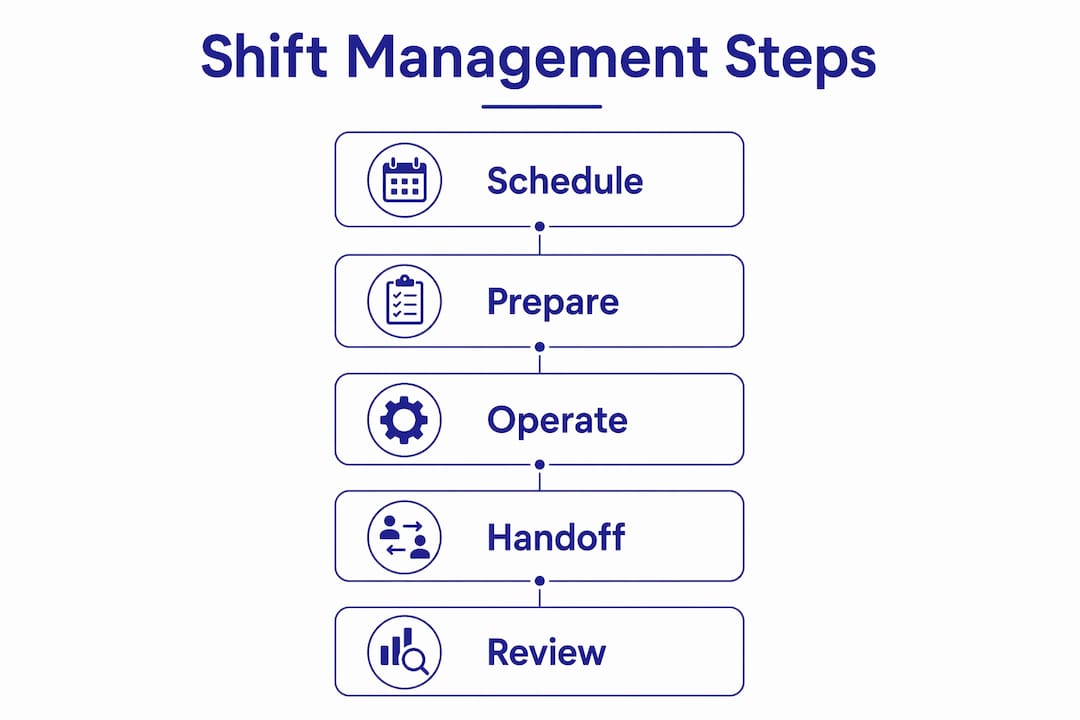
Laundromat shift management is the organized process of scheduling staff, standardizing operational tasks, and executing structured shift handoffs to maintain continuous, reliable service. The industry term for this discipline is workforce operations management, and it applies directly to every laundromat running more than one shift per day. Without it, missed shifts cost owners $300–$800 per month in last-minute scramble impact alone. The three core pillars are scheduling reliability, checklist-driven maintenance, and documented shift handoff procedures. Get all three right, and your shop runs without you standing on the floor every hour.
What are effective staff scheduling practices for laundromat shifts?
Shift scheduling for laundromats fails most often because of the tools owners use, not the people they hire. Text threads and paper schedules create confusion, generate no audit trail, and put the entire administrative burden on the manager. Switching to scheduling apps with employee-led shift swapping and automated reminders saves owners 2–3 hours per week of administrative time. That time compounds fast across a year.
The most effective scheduling structure for a laundromat uses fixed shift blocks with built-in flexibility. Fixed blocks give attendants predictable hours, which directly supports retention. Flexibility within those blocks, such as allowing staff to swap shifts through an app rather than calling the manager, removes friction without sacrificing coverage. Structured labor tiers with scheduling flexibility improve retention and reduce the high turnover that plagues service-based businesses.
Here are the scheduling practices that produce the most consistent results:
- Use a digital scheduling app. Apps with automated reminders eliminate the “I forgot” excuse and create a written record of every shift confirmation.
- Enable employee-led shift swapping. When staff can resolve coverage gaps themselves, managers spend less time on the phone and more time on operations.
- Build in overlap time. Schedule 15–20 minutes of overlap between shifts to allow a proper handoff, not a rushed hallway conversation.
- Post the schedule at least one week in advance. Last-minute schedules force last-minute cancellations. Predictability reduces no-shows.
- Track missed shifts by cost, not just count. Knowing that one missed Saturday shift costs $400 in scramble impact changes how seriously staff treat their commitments.
Pro Tip: Create two or three standard shift blocks (morning, midday, closing) and fill them consistently before adding exceptions. Consistency in the schedule builds consistency on the floor.
Many laundromat scheduling problems are systems problems, not people problems. When you replace ad hoc communication with a documented system, the number of missed shifts drops without any change in your staff.
How to standardize daily and weekly operational checklists for shifts
A checklist is only useful if it is visible, specific, and verified. Vague checklists that live in a binder under the counter get ignored. The goal is a standardized routine that any attendant can follow on day one, regardless of experience level.
Daily checklist items should cover three categories: facility readiness, customer service standards, and basic cleaning. Facility readiness includes checking that all machines are operational, coin hoppers are loaded, and the change machine is stocked. Customer service standards include confirming signage is current and the lost-and-found log is up to date. Cleaning tasks include wiping down folding tables, clearing lint traps, and mopping high-traffic areas.

Weekly and monthly tasks require a separate log. Weekly items include machine maintenance checks, reviewing the equipment fault log, and restocking supplies. Monthly items include full equipment inspections, parts inventory counts, and reviewing any recurring fault patterns. Daily walkthroughs catch most common service-call triggers within one week of consistent use. That single habit prevents the majority of avoidable repair calls.
The format matters as much as the content. Follow this structure when building your checklists:
- Print and laminate. Post the daily checklist at the attendant station and the weekly checklist in the back room. Digital-only checklists get skipped during busy periods.
- Use checkboxes, not narrative. Each item should be a yes/no action, not a description. “Lint traps cleared: Yes / No” beats “Check lint traps.”
- Date and initial every completed checklist. This creates accountability and a paper trail for equipment warranty claims.
- Separate daily from weekly tasks. Combining them into one list causes attendants to skip weekly items because they feel repetitive.
- Review completed checklists weekly. Spot patterns in skipped items and address them in your next team briefing.
Pro Tip: Conduct monthly spot-checks by walking through the checklist yourself during a live shift. Attendants who know spot-checks happen complete checklists more thoroughly.
Maintenance routines fail when they only live in the owner’s head. Laminated, posted checklists with monthly verification keep standards consistent across every shift supervisor, not just the ones you trained personally.
What are the best practices for laundromat shift handoff procedures?
A shift handoff is not a conversation. It is a structured transfer of operational accountability from one attendant to the next. Verbal-only handoffs miss problems. Paper-only handoffs get lost. The best laundromat shift handoff procedures combine a digital log with a brief face-to-face walkthrough.
A proper handoff lasts 15–20 minutes and covers five categories: production status, equipment status, quality holds, safety conditions, and pending action items. Each category should have a written entry in the shift log before the outgoing attendant leaves. The incoming attendant reads the log, asks questions, and signs a digital acknowledgment confirming they received the briefing.
The five categories in detail:
- Production status. How many orders are in progress? Which are wash-and-fold, which are dry cleaning, and what are the expected completion times?
- Equipment status. Which machines are running normally? Which have faults, are out of service, or need monitoring?
- Quality holds. Are there any orders flagged for customer review, garment damage notes, or special handling instructions?
- Safety conditions. Any spills, slip hazards, or maintenance issues that affect staff or customer safety?
- Pending action items. What tasks did the outgoing shift not complete, and what is the priority for the incoming shift?
The biggest mistake in shift handoffs is waiting until the end of the shift to write the log. Continuous logging throughout the shift creates a more reliable record than a rushed end-of-shift summary. Log machine faults when they happen. Note quality observations in real time. Record safety near-misses immediately.
| Handoff method | Reliability | Accountability | Time required |
|---|---|---|---|
| Verbal only | Low | None | 2–5 minutes |
| Paper log only | Medium | Partial | 10–15 minutes |
| Digital log plus walkthrough | High | Full | 15–20 minutes |
Digital acknowledgments and persistent open-issue registers carry unresolved items forward automatically. No issue falls through the cracks because a shift ended before it was resolved.
How to manage peak hours and adjust shift operations efficiently
Laundromat peak hour management starts with knowing your traffic patterns before you schedule a single shift. Most laundromats see peak traffic on weekend mornings, weekday evenings, and the first days after major holidays. These patterns are predictable. Your staffing should reflect them.
Effective peak hour management requires adjustments at three levels:
- Staffing level. Add a second attendant during your two or three highest-traffic windows each week. One attendant cannot manage a full floor, handle customer questions, and process wash-and-fold orders simultaneously during a rush.
- Machine availability. Reserve a block of machines for drop-off orders during peak hours. Walk-in customers who see no available machines leave and may not return. A clear reservation system prevents that loss.
- Shift handoff timing. Never schedule a shift change during your peak window. A handoff at 10 a.m. on a Saturday morning, when the floor is at full capacity, guarantees a chaotic transition. Shift changes should happen before or after the rush.
Proactive scheduling that anticipates peak hours and integrates payment and promotional strategies helps manage high-traffic periods more efficiently. Off-peak promotions, such as a discount for loads started before 9 a.m. on weekdays, redistribute demand and reduce the pressure on your busiest windows.
Your shift handoff checklist should include a peak hour note. The outgoing attendant records current machine utilization, any orders expected to complete during the next peak window, and any customer commitments made for pickup times. The incoming attendant reads this before the floor gets busy, not after.
Pro Tip: Pull your machine utilization data for the past four weeks and map it by hour. The pattern will tell you exactly where to add staff and where you are currently overstaffed.
Key Takeaways
Structured shift management is the single most effective way to reduce operational costs, improve staff retention, and maintain consistent service quality in a laundromat.
| Point | Details |
|---|---|
| Digital scheduling saves time and money | Switching from text threads to scheduling apps saves 2–3 hours per week and reduces costly missed shifts. |
| Visible checklists prevent equipment failures | Laminated, posted checklists with monthly spot-checks catch service-call triggers before they become repair bills. |
| Handoffs need structure, not just conversation | A 15–20 minute handoff covering five categories, logged digitally, prevents missed problems between shifts. |
| Peak hours require proactive staffing | Schedule extra staff before peak windows, not during them, and use off-peak promotions to redistribute demand. |
| Systems problems cause most scheduling failures | Replacing ad hoc communication with documented processes eliminates most missed shifts and operational gaps. |
What I’ve learned from watching laundromats run on instinct alone
The laundromats I’ve seen struggle most are not the ones with bad staff. They are the ones where the owner is the only system. Every procedure lives in one person’s head. The schedule exists in a text thread. The handoff is a wave goodbye at the door. When that owner takes a day off, the floor falls apart.
The shift to documented, digital operations is not about distrust. It is about building a business that does not depend on any single person being present. When a new attendant can read a laminated checklist and a digital shift log and know exactly what to do, you have built something that scales. When your most experienced supervisor calls in sick, the incoming shift still knows which machine has a fault, which order is on hold, and what the peak window looks like today.
I’ve also seen owners resist this because they think it takes too long to set up. The reality is that the setup takes one afternoon. The payoff is months of fewer phone calls, fewer missed shifts, and fewer customer complaints. The shift handoff process is where most operational value is either created or destroyed, and it costs nothing to fix except a clear template and the discipline to use it.
Small process improvements compound. A checklist that prevents one service call per month saves hundreds of dollars annually. A scheduling app that prevents two missed shifts per month saves the equivalent of a part-time salary over a year. The math is not complicated. The discipline to implement it is the only variable.
— Artur
How Kansoflow supports your shift operations

Kansoflow is a native iOS platform built specifically for laundromat owners who want to replace paper tickets, verbal handoffs, and fragmented scheduling with a single, fast system. The shift management features include a visual Kanban board that tracks every order through Wash, Fold, Dry Cleaning, and Ready stages in real time. Attendants can log machine faults, quality holds, and pending action items directly from the counter. Per-device PIN security lets staff switch users in seconds during a busy shift without slowing down the line. If you are ready to move your operations off paper and onto a platform built for the shop floor, explore Kansoflow to see how it fits your workflow.
FAQ
What is laundromat shift management?
Laundromat shift management is the structured process of scheduling staff, standardizing operational checklists, and executing documented shift handoffs to maintain consistent, reliable daily operations.
How long should a laundromat shift handoff take?
A proper shift handoff lasts 15–20 minutes and covers production status, equipment status, quality holds, safety conditions, and pending action items using a digital log plus a brief walkthrough.
What should a laundromat shift handoff checklist include?
The checklist should cover current order status, machine faults, quality holds, safety conditions, and any tasks the outgoing shift did not complete. Digital acknowledgment by the incoming attendant confirms the transfer.
How do I reduce missed shifts at my laundromat?
Switch from text-thread scheduling to a digital app with automated reminders and employee-led shift swapping. This approach saves 2–3 hours of administrative time per week and directly reduces missed shift frequency.
When should I add extra staff during peak hours?
Add staff before your peak window opens, not after it starts. Schedule shift changes outside of peak periods, and use off-peak promotions to redistribute customer traffic and reduce pressure on your busiest hours.