iOS POS Benefits for Laundromats: 2026 Owner’s Guide
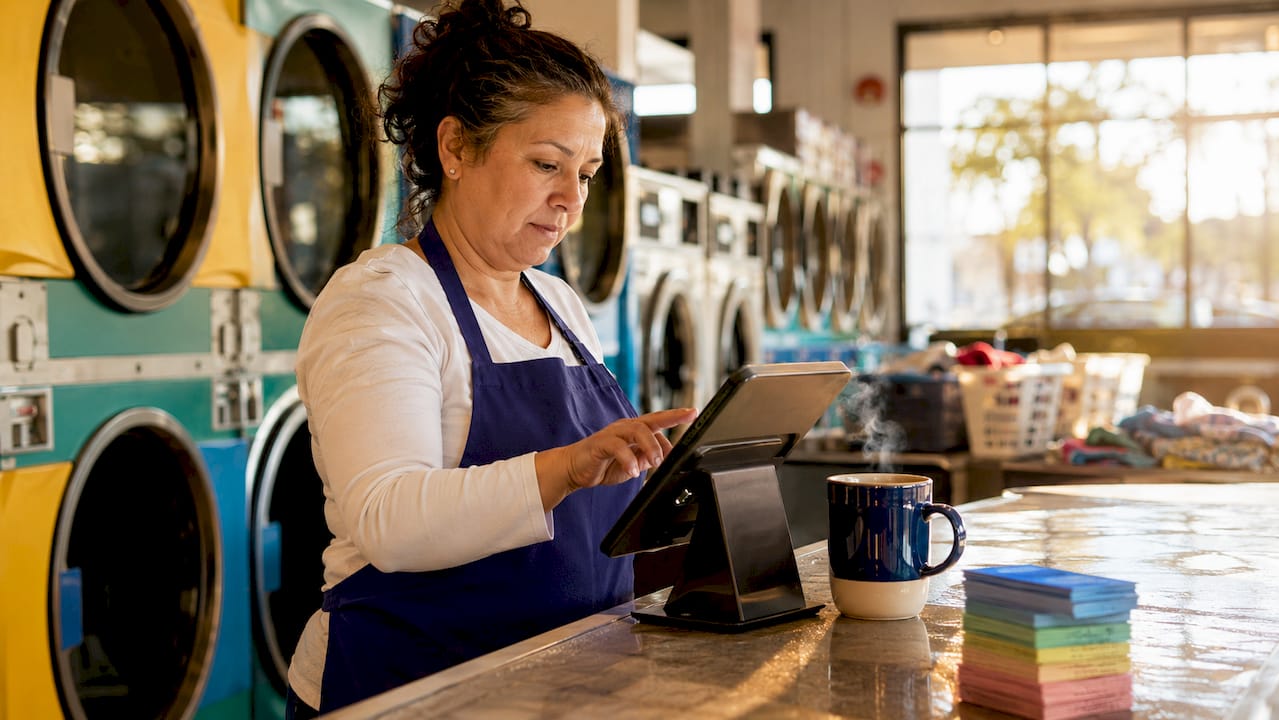
An iOS point of sale system is the most direct upgrade a laundromat owner can make to cut labor costs, reduce theft, and grow revenue without adding staff. The iOS POS benefits for laundromats go well beyond accepting credit cards. When you run a laundromat on an iPad-based platform like Kansoflow, you get real-time reporting, remote price control, digital dispute records, and a device fleet you can manage from your couch. Laundromat POS systems create a unified operational record across every shift and location, replacing end-of-day guesswork with live data. This guide covers every major advantage, with specifics on what changes operationally, financially, and for your customers.
1. iOS POS benefits for laundromats start with real-time operational visibility
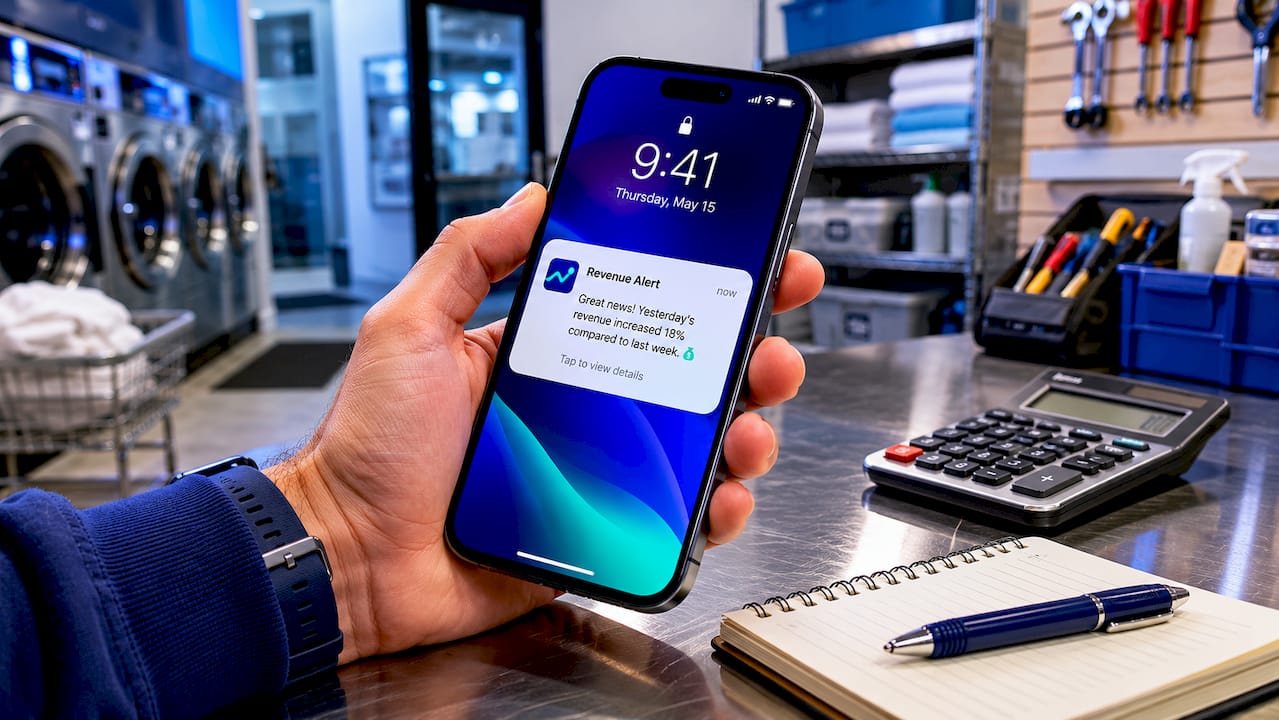
The single biggest operational shift when you move to an iOS POS is knowing what is happening in your store without being there. Real-time sales reporting consolidates machine usage, transaction counts, and revenue across every location into one dashboard. That means no more calling your attendant at 9 PM to ask how the day went.
Remote monitoring dashboards give you live machine status and revenue data, so you can respond to downtime before a customer complaint hits your Google reviews. For multi-location operators, this is the difference between managing a business and just owning one.
- Remote price and discount updates without a store visit
- Consolidated shift reports across all locations
- Machine usage data tied directly to revenue per cycle
- Instant visibility into which attendant processed which transaction
Pro Tip: Set up automated end-of-day revenue alerts on your iOS dashboard so you catch outliers, like a machine running unusually low transaction counts, before they become a maintenance bill.
2. Cashless payments cut coin-handling labor by up to 70%
Coin handling is one of the most underestimated labor drains in the laundromat industry. Counting, rolling, transporting, and reconciling coins takes hours every week, and that time costs real money. Cashless digital payments reduce labor tied to coin handling by approximately 60 to 70%, cutting both maintenance time and cash-handling overhead. That is not a marginal improvement. It is a structural change to how your store operates.
Fewer coins also means fewer coin jams, less machine downtime, and reduced vandalism on coin mechanisms. Each of those outcomes compounds into lower repair costs and higher machine uptime, which directly affects your revenue per square foot.
3. Customers prefer tap payments, and that preference drives spending
85% of customers prefer digital tap-and-go payments over coin or card-swipe alternatives. That preference is not just about convenience. Customers who pay digitally tend to spend more per visit because there is no friction from finding exact change or worrying about running out of quarters mid-cycle. Faster transactions also reduce crowding at payment kiosks during peak hours, which improves the overall experience without any additional staffing.
iOS point of sale benefits extend to loyalty programs and digital receipts, both of which are far easier to deploy on a native iOS platform than on legacy coin-based or browser-wrapped systems. Happy hour pricing, multi-cycle bundles, and referral discounts all become manageable features rather than manual workarounds.
4. Security improves when cash leaves the equation
Less cash on-site means less incentive for theft, both from external actors and from within. Payment logging in iOS POS systems creates a timestamped record of every transaction, which simplifies dispute investigations and gives you a clear audit trail across shifts. For a business running two or three shifts per day, that audit trail is worth more than most owners realize until they need it.
Dispute resolution is also getting faster at the network level. Visa’s 2026 dispute tools include AI-powered pre-dispute handling and automated evidence submission, reducing the administrative burden on merchants. Laundromats with high transaction volumes benefit directly because the system does more of the investigation work automatically.
Consistent, timestamped digital transaction records in iOS POS workflows reduce dispute resolution time and administrative effort substantially, especially for operators managing multiple shifts without constant on-site supervision.
- Every transaction is logged with time, amount, and device ID
- Chargeback responses are faster when records are digital and searchable
- Reduced cash on-site lowers both theft risk and insurance exposure
- Per-device PIN security lets you track which staff member processed each sale
5. Apple Business Manager makes multi-location management practical
Running five laundromats with five different POS setups is an operational nightmare. Apple Business Manager simplifies device enrollment and management across your entire iPad fleet, letting you push app updates, configure settings, and lock devices to specific functions from a single admin account. This is the iOS standardization advantage that Android-based or browser-wrapped systems cannot match at the same level of reliability.
Version pinning is the feature most multi-location operators overlook. It lets you freeze your POS app at a stable version across all devices until you are ready to update, preventing an automatic software push from breaking your checkout flow during a Saturday morning rush.
| Feature | iOS with Apple Business Manager | Generic Android POS |
|---|---|---|
| Centralized device enrollment | Yes, zero-touch via ABM | Varies by manufacturer |
| Version pinning for POS apps | Supported via MDM profiles | Limited, often manual |
| Staged rollout control | Yes, by device group | Rarely available |
| Uniform hardware ecosystem | iPad standardized | Fragmented across brands |
| Staff training consistency | One device type, one UI | Multiple form factors |
Pro Tip: Schedule all POS app updates during off-hours, ideally between 2 AM and 5 AM, using your Mobile Device Management platform. iOS device management tools like Apple Business Manager support time-based deployment rules that prevent update disruptions during peak business hours.
6. Revenue increases are measurable and documented
The financial case for switching to a laundromat POS system is not theoretical. Laundromats with card readers generate 17 to 22% higher revenue than coin-only stores, driven by increased customer convenience and higher per-visit spending. That gap compounds over time as loyalty programs and digital promotions bring customers back more frequently.
| Revenue Driver | Impact |
|---|---|
| Card payment adoption | 17 to 22% higher revenue vs. coin-only |
| Coin labor reduction | 60 to 70% less coin-handling time |
| Customer payment preference | 85% prefer tap-and-go |
| Dispute resolution speed | Faster with timestamped digital records |
Labor savings and reduced theft risk add to the profit picture. Most operators see ROI within the first two years of switching, and that timeline shortens when the POS platform also reduces training time and attendant errors. Real-time data from your iOS POS also supports smarter pricing decisions, like identifying which time slots are underperforming and testing a targeted discount to fill them.
7. Staff training is faster on iOS than on any other platform
iOS devices have the highest consumer familiarity of any tablet platform in the US. Most attendants already know how to use an iPad before their first shift. That familiarity cuts onboarding time significantly compared to proprietary hardware terminals or browser-based systems that require navigating multiple tabs and login screens. Standardizing on iOS tablets for POS simplifies training, maintenance, and fleet management, especially when paired with a purpose-built app like Kansoflow.
Counter-speed security features, like per-device PIN switching, let staff lock and unlock the POS in seconds without logging out of the entire system. That matters on a busy shop floor where multiple attendants share a single device across a shift.
8. How to choose a laundromat POS built for iOS
The best POS system for laundromats is one built natively for iOS, not a web app wrapped in a browser shell. Native iOS apps respond faster, work offline when your internet drops, and integrate directly with hardware like Bluetooth scales and Star Micronics receipt printers. When you evaluate options, prioritize platforms that handle the full workflow: intake, payment, order tracking, and reporting in a single interface rather than stitching together three separate tools.
Ask vendors whether their app supports Apple Business Manager enrollment, version pinning, and Stripe or Square payment integrations. Those three criteria alone will eliminate most legacy systems from consideration and point you toward platforms designed for real operational environments.
Key takeaways
iOS POS systems give laundromat owners measurable gains in revenue, labor efficiency, and security by replacing coin-based and browser-wrapped tools with a native, manageable iOS platform.
| Point | Details |
|---|---|
| Revenue lift is documented | Card-enabled laundromats earn 17 to 22% more than coin-only stores. |
| Coin labor savings are significant | Digital payments cut coin-handling time by 60 to 70% per location. |
| iOS device management scales | Apple Business Manager enables centralized control across multi-location fleets. |
| Dispute resolution is faster | Timestamped digital records reduce chargeback investigation time and effort. |
| Customer preference drives adoption | 85% of customers prefer tap payments, which increases transaction speed and spending. |
Why I think most laundromat owners underestimate the iOS advantage
Most operators I talk to frame the POS decision as a payment question. Should I accept cards? The answer is obviously yes. But the more important question is what platform you run those payments on, and that is where iOS creates a real separation from the alternatives.
The update management piece is what surprises people most. I have seen operators lose an entire Saturday morning because a POS app auto-updated overnight and broke the checkout flow. With Apple Business Manager and version pinning, that scenario is preventable. You control when updates deploy, which devices get them first, and what happens if something goes wrong. That level of control is not available on most competing platforms.
The other thing I keep coming back to is the dispute record. A laundromat runs hundreds of transactions a week across multiple shifts. Without a timestamped digital log, a chargeback dispute is a guessing game. With one, it is a five-minute search. That difference alone justifies the switch for high-volume operators.
The operators who get the most out of iOS POS are the ones who treat it as an operations platform, not just a payment terminal. Real-time data, remote management, and standardized hardware are the features that change how you run the business day to day.
— Artur
See how Kansoflow puts these benefits to work
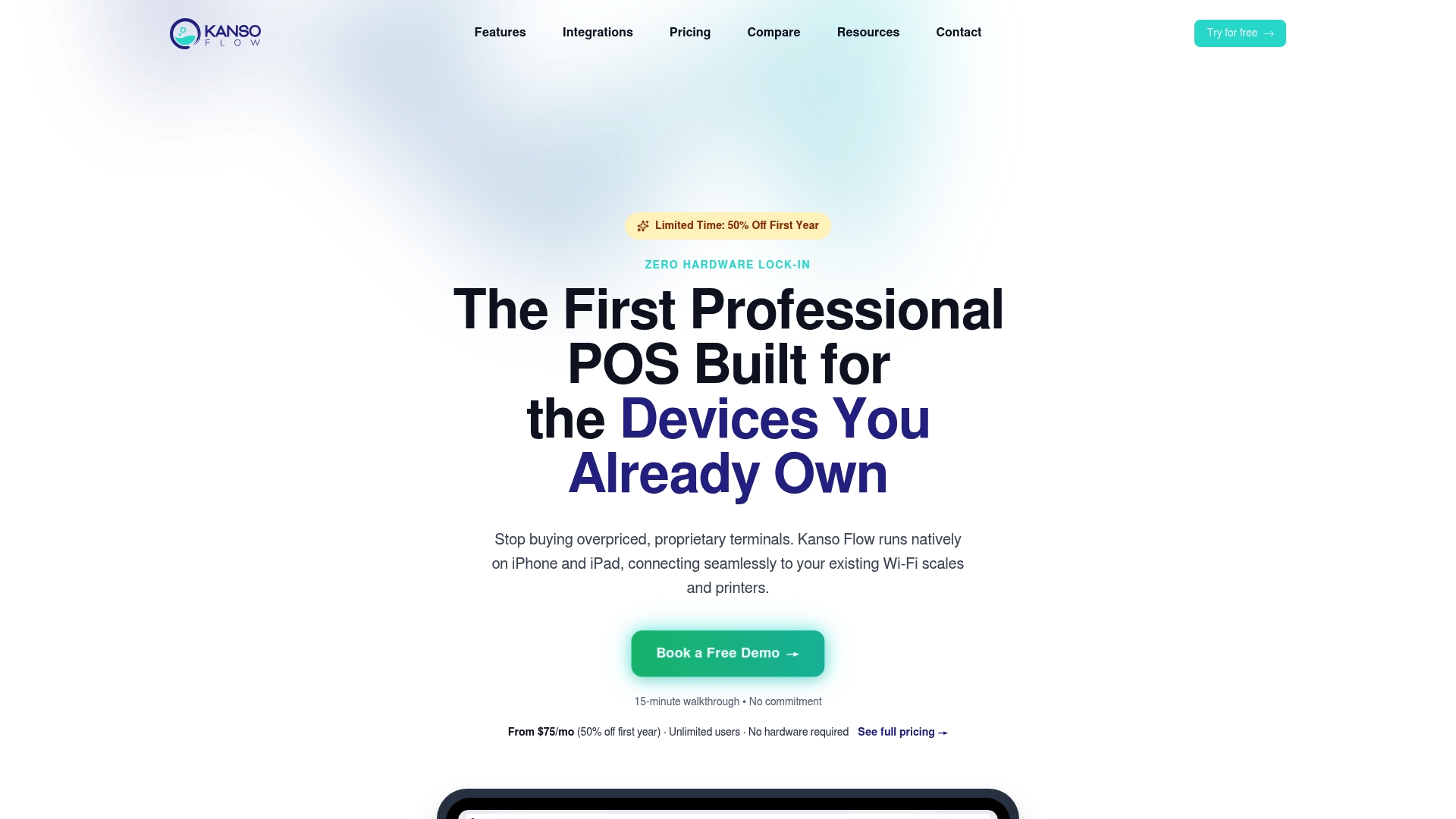
Kansoflow is a native iOS POS and operations platform built specifically for laundromat owners. It combines a visual Kanban order board, photo intake for garment claims, Stripe and Square payment processing, and Star Micronics printer integration into a single iPad app. There are no browser wrappers, no proprietary hardware bundles, and no steep learning curves for your attendants. If you are ready to replace paper tickets and coin guesswork with real-time data and digital workflows, explore the full Kansoflow feature set or visit Kansoflow.com to see how it fits your operation.
FAQ
What are the main iOS POS benefits for laundromats?
iOS POS systems give laundromat owners real-time sales reporting, cashless payment processing, remote price management, and centralized device control through Apple Business Manager. These features reduce labor costs, cut coin-handling time by 60 to 70%, and increase revenue by 17 to 22% compared to coin-only operations.
How does an iOS POS improve customer experience at a laundromat?
Tap-and-go payments preferred by 85% of customers reduce wait times and eliminate the need for exact change. Digital receipts and loyalty program integration also increase repeat visits without requiring additional staff.
Is iOS better than Android for laundromat POS systems?
iOS offers standardized hardware through the iPad lineup, centralized management via Apple Business Manager, and version pinning through Mobile Device Management profiles. These capabilities make iOS more reliable and easier to manage across multiple laundromat locations than fragmented Android hardware ecosystems.
How do iOS POS systems help with payment disputes?
Every transaction is logged with a timestamp, device ID, and payment amount, creating a searchable audit trail. Visa’s 2026 AI-powered dispute tools also automate evidence submission, which reduces the time and administrative effort required to resolve chargebacks for high-volume laundromat operators.
What should I look for when choosing a laundromat POS?
Prioritize a native iOS app over browser-based tools, and confirm support for Apple Business Manager enrollment, version pinning, and payment integrations like Stripe or Square. A platform that handles intake, payment, order tracking, and reporting in one interface eliminates the need for multiple disconnected tools.