Dry Wash Machine Cost: A Full TCO Guide for Owners
A dry-cleaning machine in the U.S. can cost tens of thousands to over a hundred thousand dollars to purchase, and that’s before you’ve paid a single contractor. Adding installation, buildout, and compliance, your total project budget realistically varies widely depending on solvent type, site condition, and local utility infrastructure. The three factors that drive the widest variance: solvent choice (perc vs. hydrocarbon vs. wet-cleaning), whether the site needs a new gas service, and whether you’re leasing a former dry-cleaner location with potential environmental liability.
Key cost drivers at a glance:
- Machine type and solvent system (perc, hydrocarbon, GreenEarth, CO₂, wet-cleaning)
- Capacity (smaller 20 lb units vs. 80 lb commercial machines)
- Ventilation and environmental controls (exhaust, containment, monitoring)
- Gas vs. electric infrastructure (gas-line buildout alone: $12,000–$25,000)
- Working capital reserve to cover early operating months
- Phase I environmental site assessment if leasing an existing dry-cleaner location
Table of Contents
- What a true total cost of ownership actually includes
- Purchase price ranges and what installation actually costs
- What you’ll spend every month to keep the machines running
- New vs. used: where the real tradeoff lives
- How to estimate ROI and payback on your equipment investment
- Financing, leasing, and tax incentives worth checking
- Questions to ask before you sign anything
- Key Takeaways
- The mistake most operators make — and how to avoid it
- Kansoflow cuts operating costs while your machines do the work
- Useful sources and next steps
What a true total cost of ownership actually includes
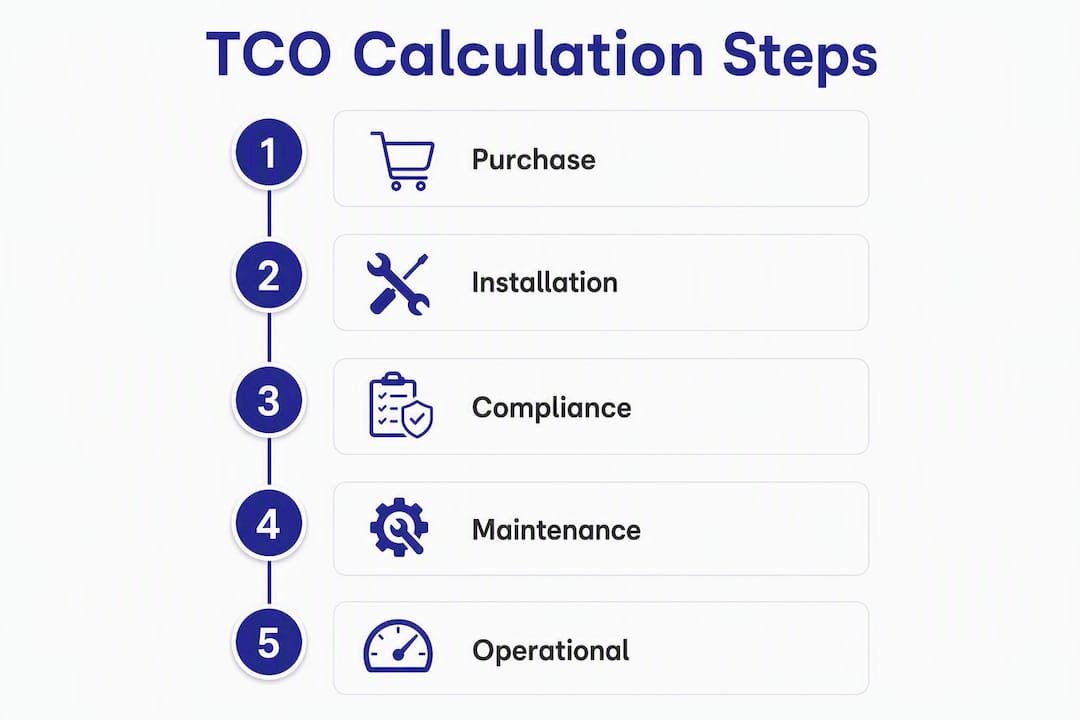
Most operators budget for the machine and forget the dozen line items that follow. A realistic TCO estimate covers all of these:
- Machine purchase (new or used)
- Rigging and installation ($3,000–$8,000 per machine for moving, hookup, and calibration)
- Boiler or steam system ($15,000–$50,000)
- Electrical service upgrade (200–400A; commonly $15,000–$50,000)
- Gas-line extension and meter upgrade
- HVAC and ventilation exhaust
- Floor drains and solvent containment
- Permits, environmental monitoring, and solvent disposal
- Specialty insurance (environmental liability, equipment breakdown)
- Working capital ($20,000–$50,000 to cover wages, rent, and early repairs)
Two items owners routinely miss: landlord indemnity clauses that require you to restore the space to its original condition, and environmental site assessments. Historic perc contamination can cost $100,000 to over $1 million to remediate — a liability that transfers to you if you sign a lease without checking.
Pro Tip: Require a Phase I environmental site assessment before signing any lease on a former dry-cleaner location. If Phase I flags a recognized environmental condition, insist on a Phase II soil and groundwater test before committing. The cost of both reports ($1,500–$5,000 combined) is trivial compared to the remediation exposure.
Purchase price ranges and what installation actually costs
Modern dry-cleaner buildouts commonly run $80,000–$400,000 total, including the cleaning machine itself, which is typically $40,000–$150,000 depending on type and capacity. Here’s how that breaks down by machine type:
| Machine Type | Typical New Price Range | Notes |
|---|---|---|
| Perc dry-cleaning machine | $40,000–$80,000 | Strictest EPA compliance requirements |
| Hydrocarbon / GreenEarth | $40,000–$150,000 | Lower regulatory burden than perc; price varies by features and capacity |
| CO₂ cleaning system | $80,000–$150,000 | High upfront; near-zero solvent disposal cost |
| Wet-cleaning system | $40,000–$150,000 | Lowest permitting cost; water-based chemistry |
| Used solvent machine (any type) | lower upfront investment | Higher retrofit and compliance risk |
Installation cost buckets to build into your quote requests:
- Rigging and delivery: $3,000–$8,000 per machine
- Gas-line and meter: $12,000–$25,000
- Boiler/steam system: $15,000–$50,000
- Electrical service upgrade: $15,000–$50,000
- Ventilation and exhaust: $5,000–$20,000
- Floor drains and containment: $3,000–$10,000
- Permits and environmental controls: $2,000–$15,000+
Capacity matters beyond price. Investing in 40–80 lb washers and high-G-force extractors materially increases revenue per square foot and cuts drying time, which directly improves throughput and ROI.
What you’ll spend every month to keep the machines running
Monthly operating costs for a single dry-cleaning machine typically include energy, solvent, maintenance, and labor expenses which can vary significantly The biggest swing factor is your energy source.
Gas vs. electric: Gas dryers generally cost less to operate than electric resistance models, sometimes substantially so. That gap compounds fast at commercial throughput. Many new U.S. stores absorb the $12,000–$25,000 gas-line buildout specifically to capture that monthly savings.
Monthly cost categories to model:
- Electricity: varies widely by state and rate schedule
- Natural gas: lower per-BTU cost than electric in most U.S. markets
- Solvent or detergent: depends on solvent type and throughput volume
- Preventive maintenance: budget an annual reserve per machine that grows after year five
- Repairs: seals, pumps, valves, and control boards become more frequent post-year five
- Labor: attendant hours, order processing, and customer service
- Waste disposal and permit monitoring: ongoing for solvent-based systems
High-spin extractors reduce residual moisture before garments hit the dryer, cutting drying time and gas or electric consumption per cycle. That’s one of the highest-ROI equipment upgrades available.
New vs. used: where the real tradeoff lives
Used equipment can significantly reduce upfront investment compared to new machines The catch is what comes after. Older machines often require costly retrofits to meet current emissions and solvent-recovery standards, and they arrive without manufacturer warranty or support.
New machines offer better energy efficiency, modern solvent-recovery systems that reduce compliance risk, and full manufacturer support. For high-volume operations, the long-term cost curve almost always favors new equipment.
Pro Tip: A used machine makes sense in two scenarios: a low-volume test location where downtime risk is tolerable, or a unit under five years old with documented service history and recent compliance certification. Outside those conditions, the warranty and efficiency gap on new equipment usually pays for itself within two to three years.
How to estimate ROI and payback on your equipment investment
Payback formula: Total investment (machine + install + compliance) ÷ monthly net cash flow attributable to the equipment = payback in months.
| Input | Conservative Example |
|---|---|
| Monthly gross revenue from dry-cleaning | $12,000 |
| Monthly net cash flow | $8,000 |
| Estimated payback period | 15 months |
Steps to run this with your own numbers:
- Get firm quotes for machine, rigging, and all infrastructure upgrades.
- Estimate monthly throughput (garments or pounds) at your target vend price.
- Subtract your full monthly operating cost (use $2,000–$4,400 as a floor).
- Divide total investment by monthly net cash flow.
- Stress-test at 70% of projected throughput to see your downside payback.
Financing, leasing, and tax incentives worth checking
Equipment financing commonly runs 3–7 years at roughly 6%–12% APR. Leasing lowers upfront cost but typically carries higher lifetime expense. Main options:
- Bank or credit union equipment loan: 3–7 years; fixed monthly payment; you own the asset
- Equipment lease: 3–5 years at 8%–12% lease rates; lower upfront, higher total cost
- SBA 7(a) or 504 loan: longer terms (up to 10–25 years), lower monthly payments, stricter qualification
- Manufacturer financing programs: often competitive rates; check for deferred-payment promotions
Tax levers to confirm with your accountant: Section 179 expensing lets you deduct the full purchase price of qualifying equipment in the year of purchase rather than depreciating it over time. Bonus depreciation may apply to new and used equipment. Some states offer energy-efficiency rebates or grants for operators switching from perc to cleaner solvent systems.
Model total cost of ownership, not just the monthly payment. A lower monthly lease payment can mask a higher total outlay over the contract term.
Questions to ask before you sign anything
Ask sellers and installers:
- What exactly is included in the installation quote (rigging, hookup, calibration, testing)?
- What are the projected electrical and gas draws under full load?
- What is the warranty scope, length, and parts availability for this model?
- What is the service response SLA, and is a service contract available?
- What is the realistic delivery and installation timeline, including permit inspections?
Ask your landlord:
- Is there an existing Phase I environmental report, and will you share it?
- What are the environmental indemnity terms in the lease?
- Is there a tenant improvement allowance, and does it cover infrastructure upgrades?
- What are the restoration obligations at lease end?
- Has the space been previously used for dry cleaning or solvent storage?
Ask your installer about permits:
- Which electrical, gas, boiler, and ventilation permits are required in this jurisdiction?
- Who pulls the permits, and what is the inspection timeline?
- What is the estimated downtime during installation and commissioning?
Key Takeaways
A dry-cleaning setup cost includes machine purchase plus buildout, compliance, and working capital, all of which can vary widely based on various factors.
| Point | Details |
|---|---|
| Budget for TCO, not sticker price | Machine purchase is often less than half the total project cost once buildout and compliance are included. |
| Require a Phase I before signing a lease | Perc contamination remediation can reach $1M+; a $1,500–$5,000 report is cheap insurance. |
| Gas infrastructure pays back fast | A $12,000–$25,000 gas-line investment cuts dryer operating cost by roughly 50% vs. electric. |
| Plan $20,000–$50,000 in working capital | Early-month wages, rent, and unexpected repairs will arrive before revenue stabilizes. |
| Kansoflow reduces OPEX from day one | Visual Kanban order tracking, photo intake, and real-time reporting cut labor friction and protect margin without adding capital expense. |
The mistake most operators make — and how to avoid it
The single most common error is fixating on the machine’s sticker price while underestimating the infrastructure and compliance costs that follow. An operator who budgets $60,000 for a hydrocarbon machine and then discovers the site needs a new gas service, a boiler, and a Phase II environmental study is looking at a project that’s suddenly $150,000. That gap has killed otherwise viable businesses.
The operational levers that protect margin after opening are less dramatic but just as important: machine mix, extractor G-force, and workflow discipline. A shop that processes orders on paper tickets, resolves garment disputes manually, and can’t see throughput by shift is leaving real money on the table every week.
Workflow software reduces that friction. When attendants can track every order visually, photograph garments at intake, and transfer orders between locations without a phone call, labor hours drop and claims disputes nearly disappear. That’s not a soft benefit — it’s a direct reduction in effective operating cost.
Kansoflow cuts operating costs while your machines do the work
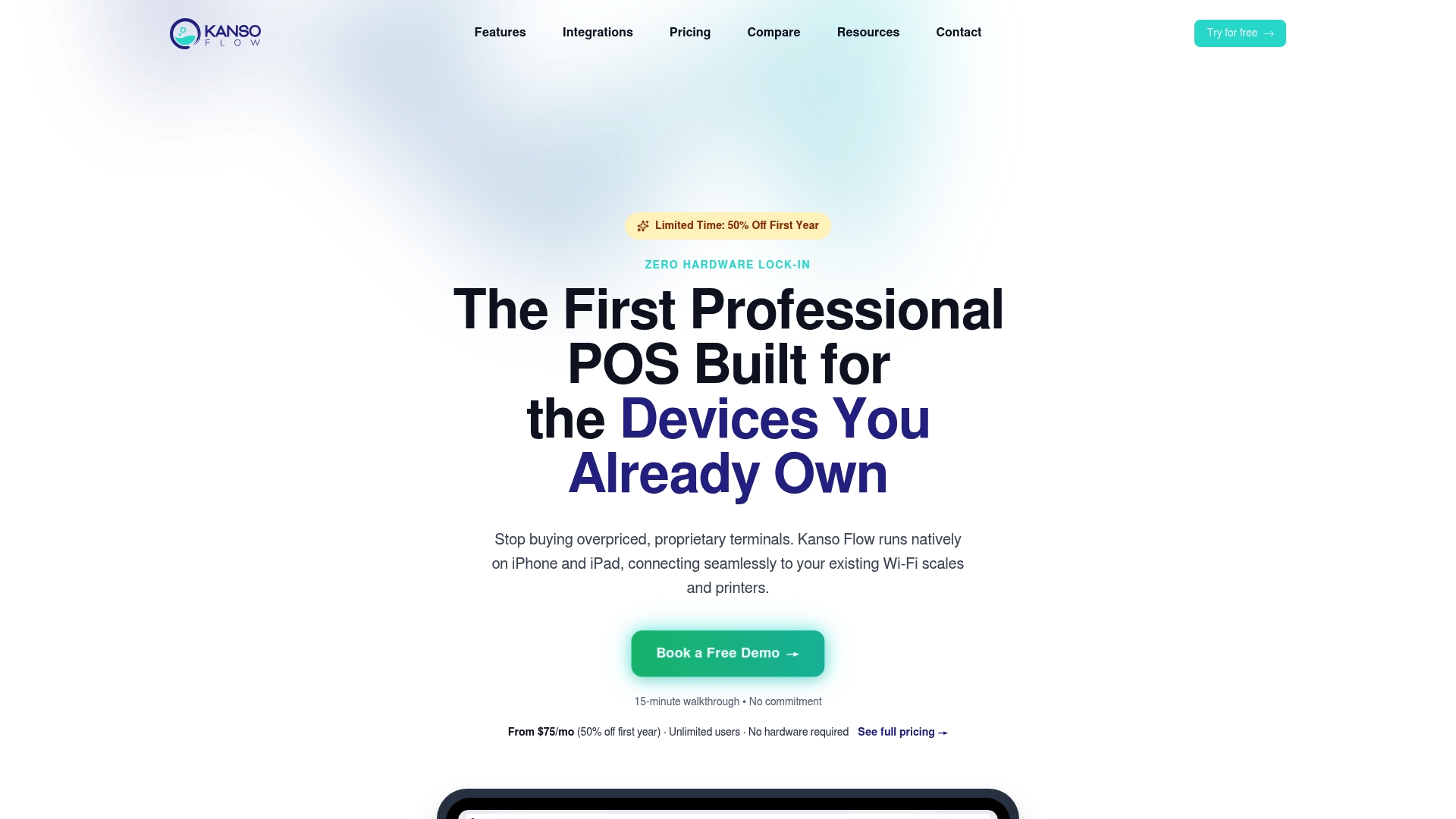
Running a dry-cleaning or laundromat operation profitably comes down to controlling what happens between the machines. Kansoflow is the native iOS POS platform built specifically for laundromat and dry-cleaner owners who want real-time visibility without adding headcount.
The features that directly reduce OPEX:
- Visual Kanban order board: attendants see every order’s stage (Wash, Fold, Dry Cleaning, Ready) at a glance, cutting rework and misroutes
- Photo intake at the counter: garment photos taken at drop-off eliminate lost-item disputes before they start
- Inter-branch transfers: move orders between drop-off locations and processing hubs without manual coordination
- Real-time reporting: spot throughput bottlenecks and energy-heavy shifts before they compound
Kansoflow runs on standard iOS devices with no proprietary hardware bundles, and it’s billed as a flat monthly subscription per location — operating expense, not capital expense. Explore the full feature set at kansoflow.com/features and factor the labor savings into your ROI model before you finalize your equipment budget.
Useful sources and next steps
Primary sources used in this article:
- How Do I Budget a Dry Cleaner Buildout? — PulseRevOps
- Commercial Laundromat Buildout Cost — BuilderMuse
- Dry Cleaner Machine Investment Guide — BusinessDojo
- How Much Does Dry Cleaning Machine Cost — DryCleanQuestions
- Equipment Selection for Laundromats — MatYard
- Dry Clean Equipment Cost Guide — GC Equipment Sales
Immediate next steps:
- Order a Phase I environmental site assessment before signing any lease
- Send a vendor RFP that requires itemized installation quotes (rigging, gas, electrical, boiler, ventilation)
- Get a utility load letter from your equipment supplier to confirm gas and electrical draw
- Check Section 179 eligibility and state energy rebates with your accountant
- Try Kansoflow to model labor and throughput savings as part of your full ROI calculation