Drop-Off Laundry Service Best Practices for Operators
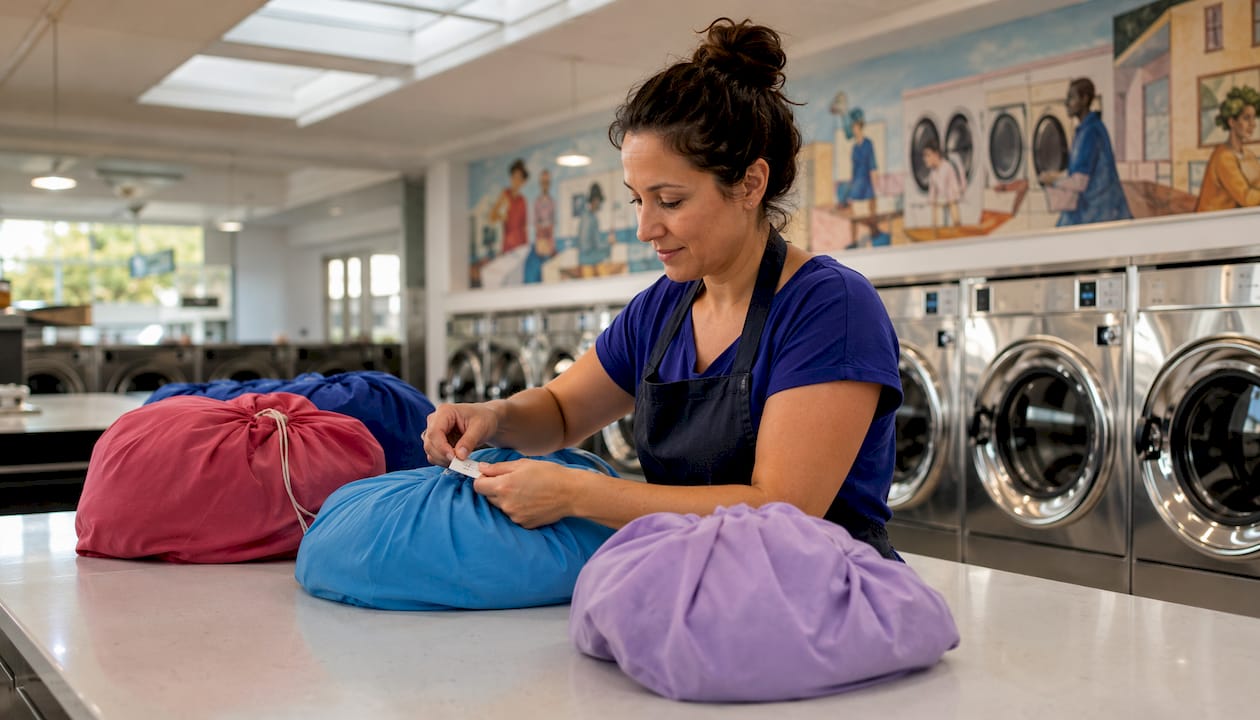
The six practices that separate profitable drop-off operations from chaotic ones: dedicate a machine bank for drop-off loads, weigh and tag every order at intake, photograph garments before processing, track orders through a POS with visual stages, publish clear turnaround tiers, and treat your counter attendant as the product itself.
Quick-priority checklist — implement these first:
- Weigh every bag in front of the customer and print a numbered tag
- Snap intake photos before the bag leaves the counter
- Reserve at least one washer/dryer pair exclusively for drop-off
- Post your turnaround SLA where customers can see it
- Open a POS order for every drop-off, no exceptions
Adding Wash-and-fold service can increase total laundromat revenue by 20%–40% when implemented correctly. That lift only holds when intake is tight, machines are available, and staff know exactly what to do.
Table of Contents
- How should you set up your shop layout for drop-off?
- Why your counter attendant is the whole product
- What should your intake workflow capture at drop-off?
- What POS features does a drop-off operation actually need?
- How should you price and communicate turnaround tiers?
- How do you turn a single drop-off into repeat business?
- Which KPIs should you track weekly and monthly?
- 30/60/90-day rollout plan
- Key Takeaways
- The floor is where the system either holds or falls apart
- Kansoflow brings these practices together in one platform
- Useful sources and further reading
How should you set up your shop layout for drop-off?
The binding constraint for scaling drop-off is fold labor and dryer availability, not wash capacity. Operators who buy more washers without addressing finishing bottlenecks just move the choke point downstream. Design your floor around that reality.
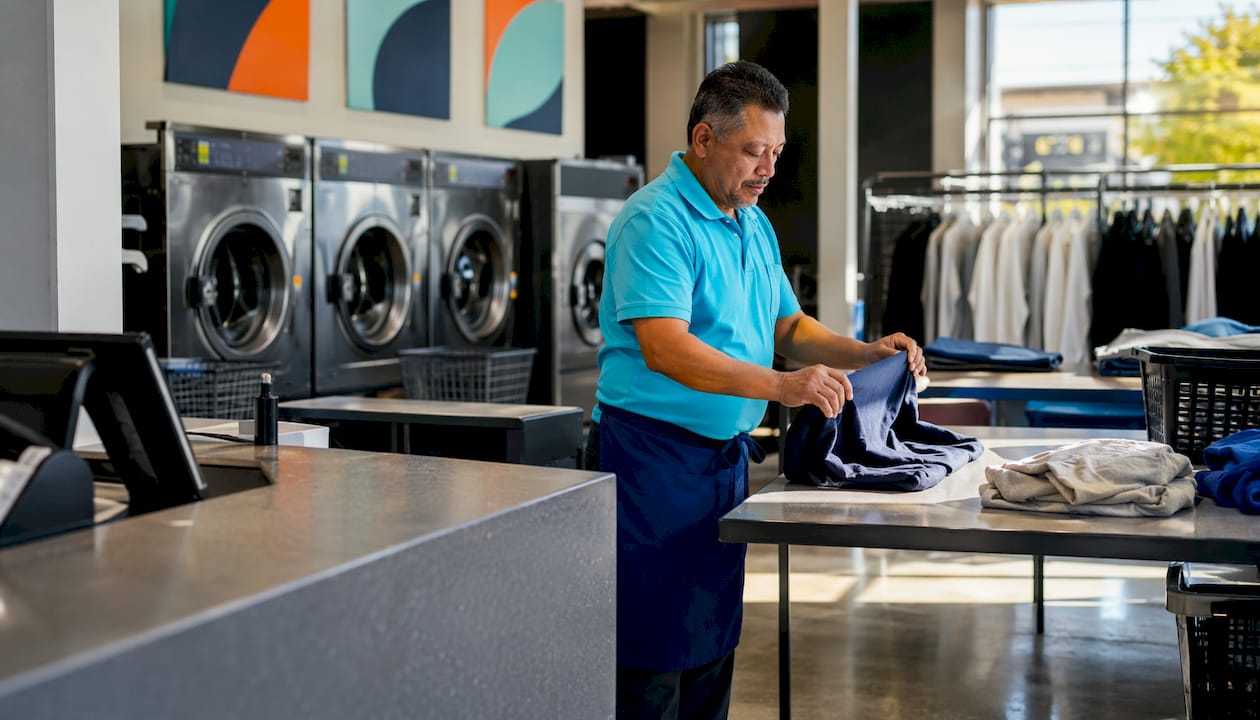
Process drop-off loads during slower hours and designate machines that self-service customers use least. A fixed bank of two washers and two dryers reserved for drop-off during midday windows keeps idle capacity productive without crowding out coin customers at peak.
Create four physical zones: intake counter, wash/dry staging, folding table, and a labeled ready-for-pickup rack. Keeping these zones distinct cuts handoffs and nearly eliminates the “where did that bag go?” problem.
| Zone | Function | Key Equipment |
|---|---|---|
| Intake counter | Weigh, tag, photo, POS entry | Bluetooth scale, tag printer, tablet |
| Wash/dry staging | Dedicated machines, order bags | High-extract washer, labeled carts |
| Folding station | Finishing, quality check | Large flat surface, good lighting |
| Ready-for-pickup | Labeled storage by order number | Shelving or hanging rack |
Pro Tip: A drop-off window with a doorbell lets customers hand off bags without waiting in a self-service line. In a constrained footprint, that single change can increase throughput noticeably during morning rush.
Why your counter attendant is the whole product
Operators who run successful drop-off services say the same thing: the attendant is the whole product. Sloppy folding loses customers faster than a slow turnaround. Hire for trustworthiness and genuine care for other people’s belongings first; teach the mechanics second.
Core training modules every attendant needs:
- Weighing and ticketing: Weigh in front of the customer, read the number aloud, print the tag immediately.
- Stain-note protocol: Flag visible stains at intake, note them on the order, and never promise removal you can’t guarantee.
- Fabric care basics: Separate delicates, check care labels, know which items need cold water or air dry.
- Honest intake communication: If a garment looks pre-damaged, say so before it goes in the wash.
- Safe cash and card handling: Follow your POS PIN procedure every time, no shortcuts.
Sample intake script: “I’m going to weigh your bag now — looks like 14.2 pounds. I’ll note these two items that need cold wash. Your order number is 1047, and it’ll be ready by 6 p.m. tomorrow. We’ll text you when it’s done.”
Pro Tip: Tie a portion of attendant pay to pounds processed per shift, but only alongside a quality checkpoint. Staffing incentives tied to pounds per shift align speed with the metric that drives revenue — without sacrificing care when quality checks are in place.
What should your intake workflow capture at drop-off?
A four-step intake sequence covers everything you need and trains in under an hour.
| Step | Action | Why It Matters |
|---|---|---|
| 1. Weigh | Weigh bag in front of customer; record in POS | Sets billing basis; opens dispute window |
| 2. Tag | Print numbered stub; attach to bag | Tracks order through every stage |
| 3. Photo | Photograph bag contents and visible items | Visual evidence for claims mitigation |
| 4. Note & stage | Record stains, special instructions, payment auth; move to intake rack | Prevents processing errors |
Weighing orders three times — at intake, before processing, and after folding — catches missing items before the customer returns. A finished weight more than roughly 2% below intake weight is a flag to retrace steps, not a reason to panic.
Photo intake and a POS order ID together become your evidence file. When a customer claims a missing item, you pull the intake photo, the pre-process weight, and the post-fold weight. Most disputes resolve in under two minutes.
HD surveillance at the intake and packing stations adds another layer. Video evidence resolves high-value claims quickly and discourages false ones.
What POS features does a drop-off operation actually need?
A purpose-built POS turns intake from a notebook guessing game into an auditable routine. Here are the features that matter operationally:
- Visual Kanban order stages (Wash → Fold → Dry Cleaning → Ready): attendants see every active order at a glance, no digging through paper tickets.
- Instant photo intake: capture garment photos at the counter and attach them to the order record.
- Bluetooth scale integration: weight flows directly into the order, no manual entry, no transcription errors.
- Numbered tag and receipt printing: Star Micronics-compatible printers generate bag tags and customer receipts in one tap.
- SMS pickup notifications: automated texts when an order moves to Ready reduce front-desk calls and no-shows.
- Per-device PIN security: staff can lock or switch users in seconds on a busy floor without slowing the line.
- Real-time throughput reports: pounds processed per shift, average order weight, and rework rate in one dashboard.
Barcode or QR tracking at each checkpoint adds staff accountability automatically. If a garment goes missing at the folding stage, the system shows who scanned it last.
How should you price and communicate turnaround tiers?
Turnaround time is the promise that separates your pricing tiers. The standard model: next-day service by a set cutoff (in by 10 a.m., ready by 6 p.m. the following day) with a same-day rush tier at a higher price.
| Tier | Cutoff | Ready By | Surcharge |
|---|---|---|---|
| Standard | 10 a.m. | Next day, 6 p.m. | None |
| Rush | 10 a.m. | Same day, 6 p.m. | Rush pricing applies |
Per-pound pricing for wash-and-fold usually ranges from about $1.25 to $2.50, with most shops setting a minimum order weight (often 10–15 lbs) to protect margin. Set your minimum to match your market and avoid underpriced small bags. Advertise your SLA based on your slowest realistic day, not your best one. Overpromising a turnaround and missing it once costs more in customer trust than the extra hour would have cost in labor.
How do you turn a single drop-off into repeat business?
Sell the hours returned, not the wash cycle. Marketing copy that says “get your Saturday back” outperforms “we wash and fold” because convenience is the primary driver for repeat visits, not price.
Low-friction retention tactics that work:
- SMS pickup notifications with the customer’s name in the message
- A named greeting at the counter (“Hi, Sarah — your usual cold-wash preference is saved”)
- Simple loyalty credits after every fifth order
- Premium packaging (tissue paper, branded bag) as an easy upsell
The two minutes it takes a customer to drop off laundry is the entire value proposition. Every friction point you remove — a faster counter, a doorbell window, an automated text — makes that two minutes feel even smaller.
Which KPIs should you track weekly and monthly?
| KPI | Formula | Cadence |
|---|---|---|
| Turnaround adherence | Orders ready on time / total orders | Daily |
| Pounds per labor-hour | Total lbs processed / fold hours worked | Weekly |
| Rework/claims rate | Rewash or dispute orders / total orders | Weekly |
| Average order weight | Total lbs / number of orders | Monthly |
Attendants own the daily checklist. The manager reviews pounds-per-shift and rework weekly. The owner does a monthly deep-dive on average order weight and labor cost per pound. When pounds-per-labor-hour plateaus, that’s the signal to add fold staff before buying another washer.
Pro Tip: Model labor cost per pound before adding equipment. A new washer without finishing capacity just moves the bottleneck.
30/60/90-day rollout plan
Days 1–30: Foundation
- Designate your drop-off machine bank and post signage.
- Print intake ticket templates (fields: customer name, phone, weight, tag number, stains, special instructions, signature).
- Train all attendants on the four-step intake sequence.
- Set your turnaround SLA and post it at the counter.
- Open a POS order for every drop-off starting Day 1.
Days 31–60: Measurement
- Track turnaround adherence and rework rate weekly.
- Run pounds-per-shift numbers to identify your fastest and slowest attendants.
- Introduce SMS pickup notifications.
- Audit intake photos for completeness.
Days 61–90: Optimization
- Adjust staffing schedule based on actual peak drop-off windows.
- Introduce rush pricing if demand supports it.
- Review average order weight; raise minimum if small orders are hurting margin.
- Benchmark: target fewer than 2% rework and 90%+ on-time turnaround.
Staffing benchmark: one fold attendant per 80–100 lbs of drop-off volume per shift is a reasonable starting point. Adjust as you measure.
Key Takeaways
Effective drop-off operations run on three pillars: documented intake (weigh, tag, photo), dedicated equipment, and a POS that tracks every order from drop-off to pickup.
| Point | Details |
|---|---|
| Dedicate machines | Reserve a fixed washer/dryer bank for drop-off to protect turnaround SLAs. |
| Three-point weighing | Weigh at intake, pre-process, and post-fold to catch missing items before pickup. |
| Photo intake as evidence | Intake photos and order IDs resolve most disputes in under two minutes. |
| SLA honesty | Set turnaround based on your slowest realistic day; missing a promise costs more than the extra hour. |
| Kansoflow for POS | Kansoflow’s visual Kanban, photo intake, Bluetooth scale support, and SMS notifications implement these practices in one native iOS platform. |
The floor is where the system either holds or falls apart
Most operators who struggle with drop-off aren’t failing on pricing or marketing. They’re failing at the counter, specifically at the moment a bag changes hands with no weight recorded, no photo taken, and no order opened in a system.
The attendant-as-product idea sounds like a soft cultural point, but it has hard operational consequences. A well-trained attendant who weighs every bag, notes every stain, and opens a POS order in under 90 seconds is doing more claims prevention than any policy document ever will. The photo and the weight record are the policy.
What actually shifts culture is tying a visible metric to the behavior you want. Pounds-per-shift on a whiteboard, reviewed weekly, changes how attendants think about finishing speed. Pair it with a rework rate on the same board and you get speed without carelessness. That combination is harder to build than any piece of equipment, and it’s also harder for a competitor to copy.
Kansoflow brings these practices together in one platform
Paper tickets and notebook logs work until they don’t. The first disputed order that takes an hour to resolve, or the first bag that goes missing because no one photographed it, is usually the moment operators realize the system needs to change.
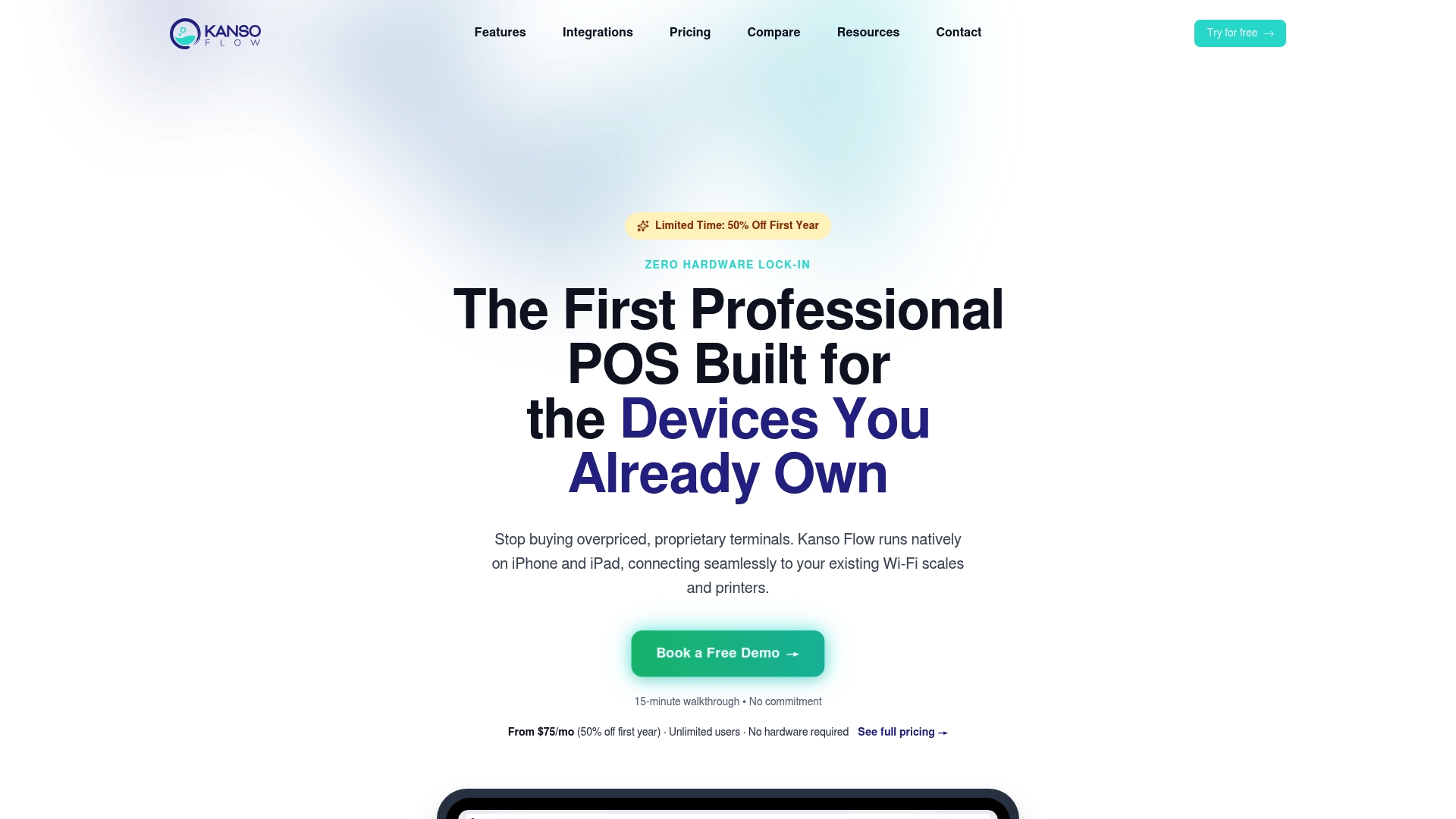
Kansoflow is a native iOS POS built specifically for laundromats and dry cleaners. It puts a visual Kanban board, instant photo intake, Bluetooth scale integration, Star Micronics tag printing, automated SMS notifications, and per-device PIN security on a standard iPad at your counter. Every feature in the intake checklist above maps directly to a Kansoflow capability. No proprietary hardware bundles, no browser lag, no paper tickets.
See the full feature set or go straight to kansoflow.com to start a trial and run your first drop-off order the right way.
Useful sources and further reading
| Resource | What It Covers |
|---|---|
| American Coin-Op: Drop-Off Do’s and Don’ts | Dedicated machine strategy and off-peak scheduling |
| The MatYard: Drop-Off Staffing and Intake | Attendant training, turn time, and intake workflow |
| Laundry Owners Warehouse: Cutting Missing Items | Three-point weighing and photo intake for claims mitigation |
| Real Clean Group: Wash-and-Fold Guide | Per-pound pricing bands and minimum order guidance |
| Laundromat Resource: Starting Drop-Off Service | Marketing framing and convenience positioning |
| Ezer Business Suite: Barcode and QR Tracking | Scanning checkpoints and staff accountability |
Intake ticket templates and tag-stub formats are available through Kansoflow’s onboarding resources. Contact the team at kansoflow.com to request copies.