Coin Operated Laundromats: What to Expect and How to Use Them
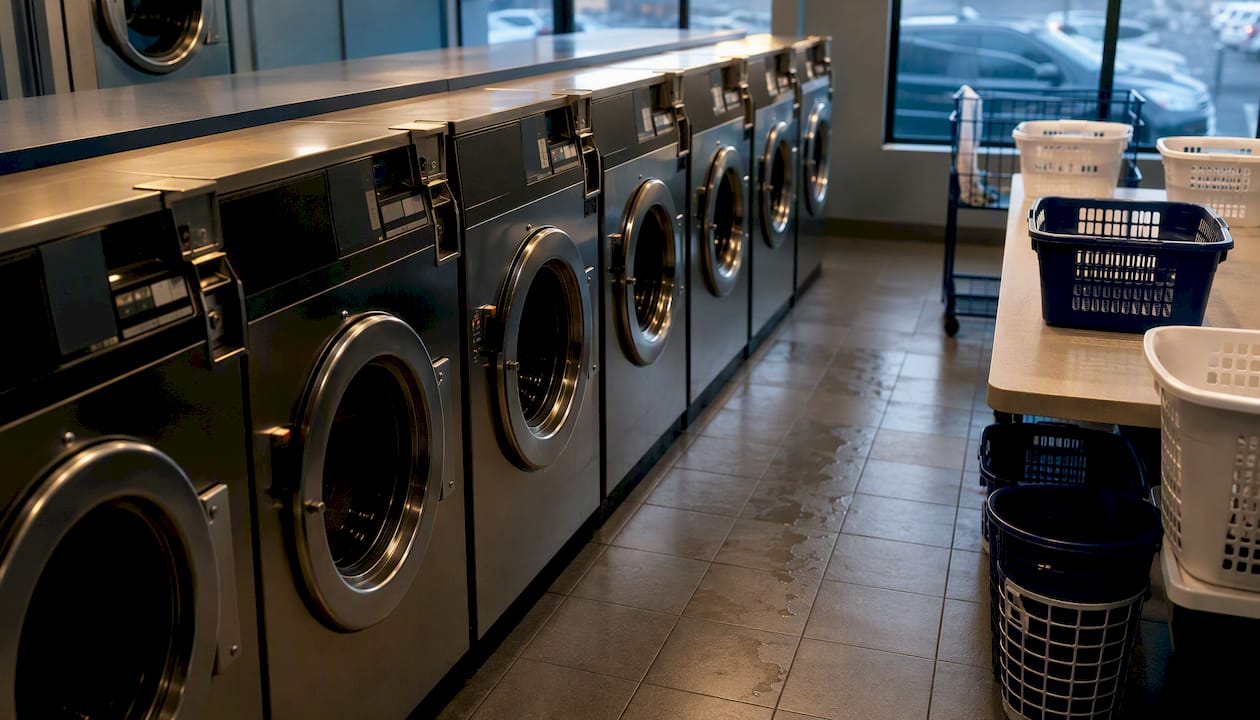
A coin operated laundromat is a self-service business where you pay to use commercial washers and dryers on-site, with payment accepted via coins, tokens, or increasingly, card and app systems. Walk in, load your clothes, pay, and you’re done. Most locations run small washers ($2–$4 per load), medium to large machines ($4–$8), and extra-large commercial units ($8–$12 or more). Dryers typically charge $0.25–$0.75 per 5–10 minutes. These are approximate ranges; prices vary by city, machine size, and whether you’re using hot water.
What you’ll find at most locations:
- Washers in multiple sizes (20 lb household-style up to 60–80 lb commercial units)
- Dryers, usually coin- or card-operated, priced per time increment
- A change machine or payment kiosk (at most modern shops)
- Folding tables and seating
- Some locations also offer wash-and-fold drop-off. Roughly a third of digitally active shops provide pickup and delivery; overall service rates vary, but among menu-publishing laundromats, 95.7% list wash-and-fold and 34.5% offer pickup and delivery.
According to a sample of 2,165 laundromats that publish machine-readable menus, 95.7% listed wash-and-fold and 34.5% offered pickup and delivery. That sample skews toward digitally mature operators, so those numbers don’t represent all U.S. laundromats, but they do show the direction the industry is moving.
Key Takeaways
Coin operated laundromats offer self-service washing and drying at commercial scale, with prices, payment types, and services that vary significantly by location and operator.
| Point | Details |
|---|---|
| Price range | Small washers run $2–$4; extra-large units can reach $8–$12 per load. |
| Payment prep | Carry quarters as a backup even at card-enabled shops; some require a proprietary app. |
| Service availability | Among menu-publishing laundromats, wash-and-fold is listed at 95.7% and pickup and delivery at 34.5%. These rates reflect digitally active shops, and actual service availability varies by location. |
| Best search approach | Use “laundromat near me” and call ahead to confirm hours, machine sizes, and payment type. |
| Etiquette matters | Move clothes promptly from finished machines and clean lint traps to keep the shop running smoothly. |
Table of Contents
- What is a coin-operated laundromat, and where did the name come from?
- How coin-operated laundromats work: machines, cycles, and payment
- Typical prices and machine sizes: what you’ll pay
- Common services and amenities at self-service laundry locations
- Step-by-step: how to use a coin-operated laundromat
- Payment options and the shift toward cashless systems
- How to find a laundromat near you and what to check first
- Practical tips, etiquette, and hygiene at the laundromat
- What operators actually think about when they set up a laundromat
- Sources
What is a coin-operated laundromat, and where did the name come from?
Self-service laundry is the formal term. In the U.S., the most common names are laundromat, coin laundry, and coin-op. In parts of the South, you’ll hear “washateria.” The British equivalent is “launderette.” All refer to the same basic concept: a commercial facility with pay-per-use washing and drying machines.
“Laundromat” started as a brand name registered by Westinghouse in the 1940s. Like “Xerox” or “Band-Aid,” it became so widely used that it lost its trademark protection and entered everyday American English as a generic term for any self-service laundry facility.
The first public self-operated laundry in the U.S. opened in Fort Worth, Texas, in April 1934. By the late 1940s, unattended 24-hour laundromats had emerged. The model persisted because it gave urban and suburban residents access to commercial-grade machines without owning them, a practical solution for apartment dwellers and anyone without in-unit laundry.
The industry is classified under NAICS code 812310, which covers businesses operating coin- or card-operated washers and dryers and offering both self-service and full-service laundry.
How coin-operated laundromats work: machines, cycles, and payment
Machine types and sizes
Most shops stock two or three machine tiers:
- Small/standard (20–30 lb capacity): Fits a regular weekly load, about one set of sheets, or a mix of everyday clothes.
- Large (40–60 lb capacity): Good for comforters, multiple loads combined, or bulky items like jackets.
- Extra-large (60–80 lb capacity): Built for king comforters, rugs, or high-volume commercial use.
Cycle stages and run times
A standard wash cycle runs 25–40 minutes depending on the machine and settings. Most machines offer cold, warm, and hot water options. Hot water costs more at many locations. After washing, move clothes to a dryer. Dryer cycles typically run 8–10 minutes per quarter, and most loads need 30–45 minutes total.
Payment mechanics
Older machines accept quarters only. Many modern shops use a central payment kiosk where you load a card or pay by app, then enter your machine number. Some hybrid setups keep coin slots active while also accepting card. Drop-off and wash-and-fold services are paid at the counter, usually by cash or card.
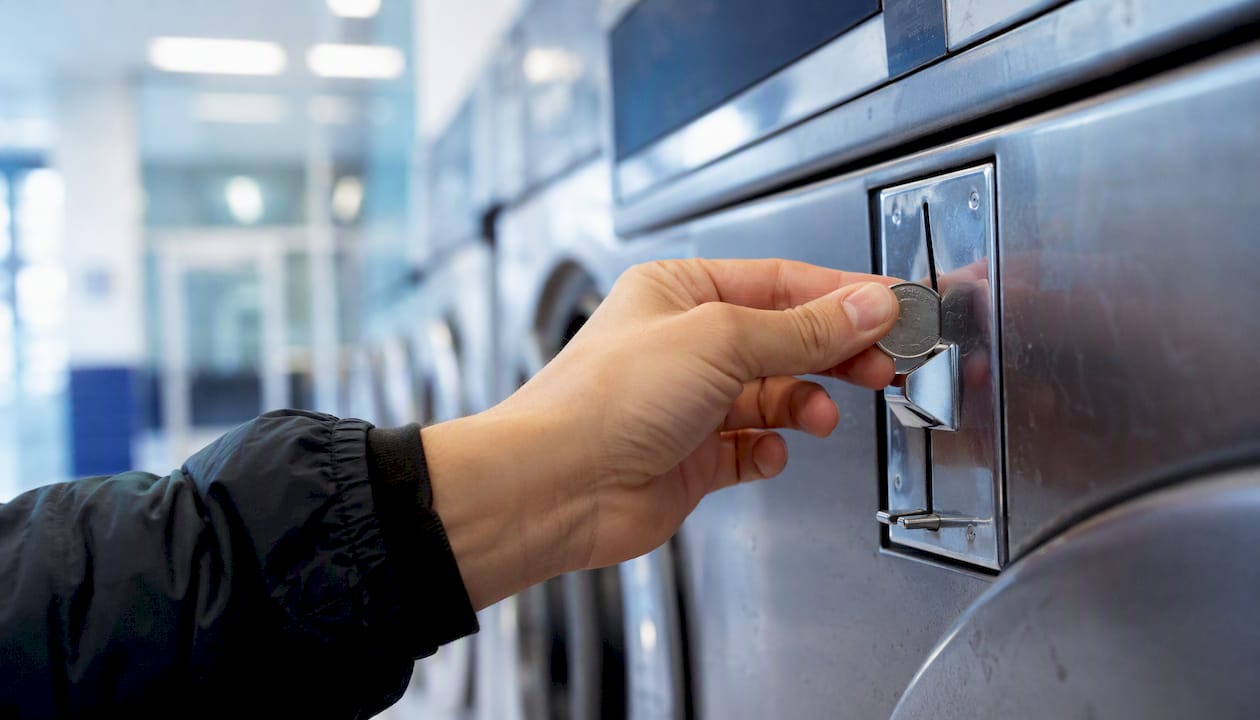
Pro Tip: On card-enabled machines, double-check that your cycle actually started after payment. A few systems require you to press “Start” separately after the kiosk authorizes the charge. If the drum isn’t moving within 30 seconds, check the display before assuming it’s running.
Typical prices and machine sizes: what you’ll pay
Prices vary by region and machine age, but here’s a realistic ballpark for most U.S. locations:
Hot water cycles often add $0.50–$1.00 to the base price. Urban markets (New York, San Francisco, Chicago) run higher than suburban or rural locations. Dryer pricing is almost always per time increment rather than per load, so a heavy or damp load costs more.
The laundromat industry report covering NAICS 812310 confirms that coin- or card-operated equipment, wash-and-fold, and sometimes dry-cleaning or linen services are the core revenue activities for shops in this sector.
Common services and amenities at self-service laundry locations
Beyond the machines themselves, most established laundromats offer a range of conveniences:
Standard amenities you’ll find at most locations:
- Folding tables and plastic or upholstered seating
- Vending machines (detergent pods, dryer sheets, snacks, drinks)
- Change machines or coin dispensers
- Restrooms
- Overhead TVs or Wi-Fi at newer locations
Service add-ons that vary by shop:
- Wash-and-fold (drop-off laundry): You drop off a bag, staff washes and folds it, you pick it up later. Among shops that publish menus, 95.7% list this service, though that figure reflects digitally active operators.
- Pickup and delivery: A driver collects your laundry and returns it clean. In a comparable menu-publishing sample, roughly a third offered this.
- Bedding and comforter cleaning: Available at 85.9% of menu-publishing shops in that sample.
- Rug and area rug cleaning: Less common, appearing at 45.8% of the sampled locations.
- Dry cleaning: Found at 26.4% of the sample.
- Commercial accounts: Some shops serve small businesses, salons, or restaurants needing regular linen service.
To find out what a specific location offers, check their website or Google Business listing before you go. Many shops post a service menu near the entrance or at the counter.
Step-by-step: how to use a coin-operated laundromat
- Sort your laundry at home. Separate darks, lights, and delicates before you arrive. It saves time and avoids color bleeding.
- Choose the right machine. Pick a washer that fits your load without overpacking. A stuffed machine won’t clean well.
- Load and add detergent. Most machines have a detergent drawer (top-loaders may require detergent added directly to the drum). Use the amount recommended for the load size.
- Select your cycle and temperature. Cold water is fine for most loads and costs less. Hot water is worth it for bedding, towels, or heavily soiled items.
- Pay and start. Insert coins, tap your card at the kiosk, or scan a QR code depending on the system. Confirm the machine starts.
- Set a phone alarm. Come back a few minutes before the cycle ends. Leaving clothes sitting in a finished machine is the most common etiquette complaint at laundromats.
- Move to a dryer promptly. Pick a dryer that’s warm (it’s already heated and will dry faster). Load evenly and don’t overfill.
- Fold before you leave. Use the folding tables. Leaving clothes piled on a table blocks other customers.
- For drop-off services: Get a receipt with your order number. Take a photo of it. Some shops text you when your order is ready.
Pro Tip: Never leave valuables in your laundry bag or on top of a machine. If you visit a 24-hour laundromat late at night, stay with your clothes or bring someone along. Most locations are safe, but an unattended bag is an easy target.
Payment options and the shift toward cashless systems
Many laundromats are still coin-capable, and that’s not changing overnight. A sizable share of regular customers prefer cash, and older machines are expensive to replace. Hybrid setups, where coin slots stay active alongside a card kiosk, are the most common configuration at shops that have upgraded.
Here’s how the payment landscape breaks down:
| Payment Type | Where You’ll Find It | What to Prepare |
|---|---|---|
| Quarters only | Older or rural locations | Bring about $10 in quarters |
| Coin + card kiosk | Most mid-size urban shops | Card or cash for the kiosk |
| App-based payment | Newer or chain locations | Download the app before arriving |
| Pay at counter | Drop-off/wash-and-fold | Cash or card |
The shift toward card and app systems is driven by operators wanting to reduce cash handling and gain transaction data. Modern management software now supports cashless payments alongside order tracking and digital workflows, changing how shops handle both self-service and drop-off customers.
Practical prep before any visit:
- Call ahead or check Google Maps to confirm payment type
- Carry at least $10 in quarters as a backup, even at card-enabled shops
- If the location uses a proprietary app, download it before you arrive — some require account setup before you can pay
How to find a laundromat near you and what to check first
Searching “laundromat near me” or “coin laundry [your city]” on Google Maps pulls up rated locations with hours, photos, and often a service menu. Refine with terms like “wash and fold near me” or “24 hour laundromat” if you need specific services or late-night access.
Before you drive over, confirm:
- Hours: Many laundromats close earlier than their posted “last wash” time. The last wash cutoff is usually 1–2 hours before closing.
- Payment type: Coin-only shops require quarters. Card shops may require a specific app.
- Machine availability: Weekends between 10 AM and 2 PM are peak hours at most locations. Midweek mornings are usually quieter.
- Machine sizes: If you’re washing a king comforter, call ahead to confirm they have a 60 lb or larger unit.
- Parking and safety: Street parking at urban laundromats can be tight. Check the Google Maps photos for a sense of the neighborhood.
- Drop-off cutoff times: Wash-and-fold orders typically need to be dropped off by early afternoon for same-day turnaround.
Online menus aren’t always current. A quick phone call takes 90 seconds and saves a wasted trip.
Practical tips, etiquette, and hygiene at the laundromat
Etiquette basics
- Don’t leave clothes in a finished machine. Other customers are waiting.
- If you must move someone’s finished load, place it neatly in a basket, not on the floor.
- Clean the lint trap in the dryer before and after your load.
- Wipe up detergent spills on machines and folding tables.
Troubleshooting common problems
- Coin jam: Press the coin return first. If it doesn’t release, notify the attendant or call the number posted on the machine.
- Card payment failed: Check that the kiosk registered the charge before assuming the machine is broken. Try a different card or use coins.
- Machine stops mid-cycle: Note the machine number and contact the attendant. Most shops post a manager phone number on each machine for unattended locations.
- Lost item: Report it immediately to the attendant or call the shop. Shops with photo intake systems can pull up your order record quickly.
Health, hygiene, and accessibility
Run bedding and towels on a hot cycle (at least 140°F) to kill dust mites and bacteria. Wipe down the inside of the washer drum with a paper towel before loading if the machine looks dirty. Hand sanitizer after handling shared surfaces is a reasonable precaution.
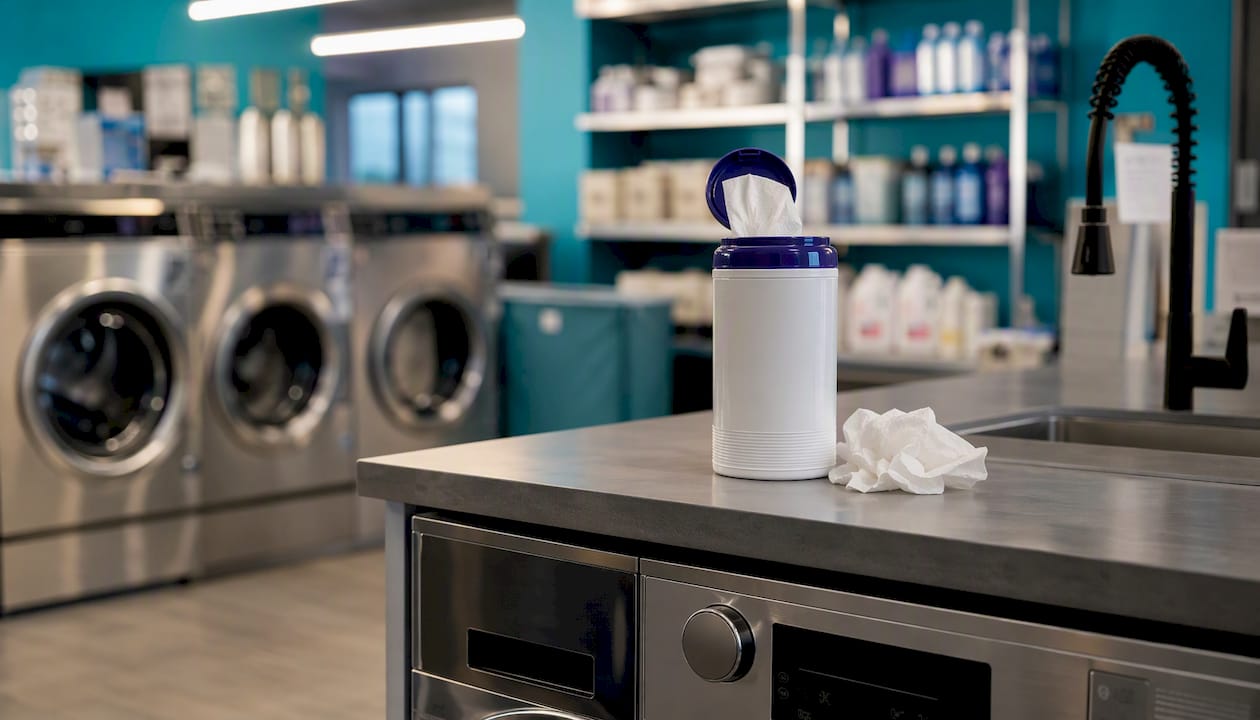
Most modern laundromats are required to meet ADA accessibility standards, including accessible machine heights, clear floor space for wheelchair users, and accessible restrooms. If you need assistance, ask the attendant; many shops will help load or unload machines on request.
What operators actually think about when they set up a laundromat
Running a laundromat looks simple from the outside. The real work is uptime, payment reliability, and managing drop-off orders without losing garments or creating disputes.
Operators who add wash-and-fold and pickup and delivery face a different set of problems than self-service-only shops. Experienced operators report that photo documentation, order numbers, and bin staging are the difference between a smooth operation and a constant stream of “where’s my shirt?” calls. Digital workflows reduce those disputes and speed up order turnaround.
Payment system choices come down to customer mix. A shop in a neighborhood where many customers are unbanked keeps coin machines because that’s what those customers need. A shop near a university upgrades to app-based payment because students don’t carry quarters. Neither is wrong; it’s a business decision based on who walks through the door.
Modern POS platforms like Kansoflow change the counter experience by supporting per-device PIN access, integrated payment processors, Bluetooth scale integrations, and real-time reporting. For operators managing drop-off volume, photo intake at the counter eliminates the most common source of customer disputes before they start.
If you run a laundromat and want to cut counter friction, reduce lost-item disputes, and get real-time visibility into your orders, Kansoflow’s laundromat POS is built specifically for that workflow.